
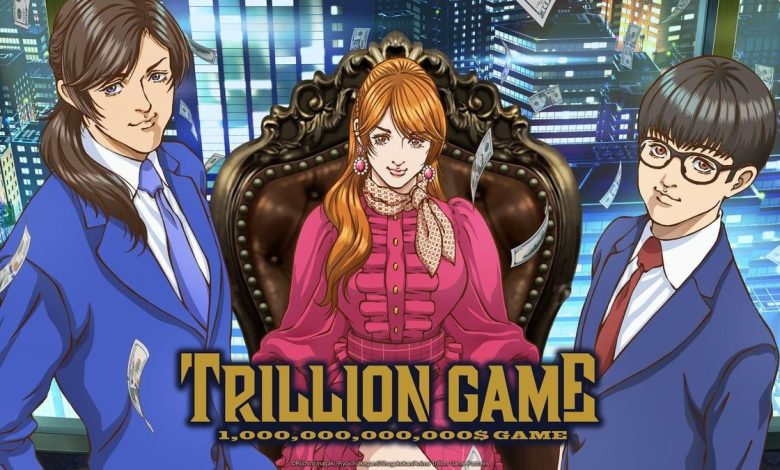
Trillion Game: How Two Misfits Aimed for a Trillion Dollars and Redefined the Business Thriller
In an anime landscape often dominated by supernatural battles and fantastical quests, a different kind of high-stakes duel emerged in 2024. Trillion Game, based on the hit manga by Riichiro Inagaki (author of Dr. Stone) and illustrated by Ryoichi Ikegami, is a series that swaps magical incantations for boardroom presentations, monstrous villains for corporate titans, and power-ups for psychological gambits.
It asks a deceptively simple question: What if the ultimate game wasn’t fought with fists or magic, but with business strategy, social engineering, and sheer, unadulterated charisma? The premise is as audacious as its protagonists: two young, seemingly ordinary men, Haru Tennoji and Gaku Manabe, make a pact to amass a trillion dollars.
What follows is not a slow corporate climb, but a series of brilliant, theatrical “heists” where their target isn’t money, but the companies and people who control it. Trillion Game is a slick, fast-paced psychological thriller that dissects the art of persuasion, the power of narrative, and the volatile chemistry of a partnership between a genius of human emotion and a genius of digital logic.
Information 

Trillion Game
➻ Type :- TV
➻ Genres :- #Comedy, #Drama, #Business, #Entrepreneurship
➻ Status :- Finished Airing (Season 1)
➻ Aired :- 2023
➻ Language :- Tamil Dub
➻ Episode :- 26
➻ Duration :- 24 min per ep
This guide will be your prospectus to this captivating series. We will analyze the unbeatable duo of Haru and Gaku, break down their most ingenious “games,” explore the series’ unique take on finance and technology, and uncover why Trillion Game is the most electrifying business story in anime.
Table of Contents
Prologue: The Genesis of a Trillion-Dollar Dream
The story of Trillion Game begins not in a corporate office, but in a flash of shared frustration and boundless ambition. Haru Tennoji, a socially awkward programming prodigy with a heart of gold, is unjustly fired from a major tech firm. Gaku Manabe, a charismatic, rule-breaking salesman who lives by his wits, witnesses this injustice. Recognizing Haru’s genius, Gaku doesn’t offer sympathy; he offers a partnership in a venture more outrageous than any start-up: “Let’s get a trillion dollars.”
This isn’t a metaphorical goal. It’s a literal, astronomical target—a number representing not just wealth, but ultimate freedom and the power to reshape the world on their terms. They aren’t interested in building a company from the ground up through traditional means. Their method is “gameification”: identifying undervalued or troubled companies, analyzing their human and structural weaknesses, and executing a precise, often dramatic, plan to acquire control or extract massive value. Each arc is a self-contained “game” with a clear target, a set of rules (which they often bend), and a winner-takes-all prize. From the outset, Trillion Game establishes itself as a thriller where boardrooms are battlefields and confidence is the deadliest weapon.
Chapter 1: The Unbeatable Duo – The Sun and The Moon of Strategy
The core of Trillion Game’s appeal is the symbiotic, near-telepathic partnership between its two leads, who form one of anime’s most compelling duos.
Haru Tennoji: The Engine of Logic
Haru is the series’ surprising anchor. A meek, hoodie-clad programmer, he is a “digital native” who sees the world as systems and code.
- The Prodigy Programmer: His technical skill is近乎 supernatural. He can hack secure systems, build revolutionary apps overnight, and analyze complex data flows with ease. He represents cold, hard logic and the boundless potential of technology.
- The Moral Compass: Despite his power, Haru is deeply principled. He initially resists Gaku’s more ethically grey schemes, representing the audience’s conscience. His growth lies in learning to apply his genius proactively within Gaku’s grand, amoral narratives, becoming the strategic “engineer” who makes the impossible plans technically feasible.
- The Human Element: His social anxiety makes him relatable. Watching him step out of his comfort zone, using his logic to understand and predict human behavior at Gaku’s urging, is a key part of the series’ satisfaction.
Gaku Manabe: The Architect of Charisma
If Haru is the moon—cool, analytical, and reflective—Gaku is the sun: blindingly bright, unpredictable, and the center of gravity.
- The Social Hacker: Gaku operates on a simple, terrifying philosophy: “Everything in the world runs on people’s feelings.” He is a master of reading rooms, manipulating emotions, and crafting compelling narratives. He doesn’t just sell a product; he sells a dream, a revolution, a version of the future so enticing that people willingly hand over the keys to their kingdom.
- The Theatrical Showman: Every move is a performance. His plans are less like business strategies and more like screenplay acts, complete with dramatic entrances, calculated reveals, and emotional crescendos. He understands that in the modern world, perception is reality, and he is a master at controlling it.
- The Vulnerable Core: Beneath the unflappable confidence, glimpses of a deeper drive emerge. His quest for a trillion dollars is as much about proving a point—that the system is a game that can be beaten by outsiders—as it is about wealth. His loyalty to Haru is absolute, forming the emotional bedrock of the series.
Together, they are “Tennoji & Manabe.” Haru provides the flawless, logical foundation; Gaku builds the dazzling, persuasive facade upon it. Their dynamic is less leader/follower and more visionary/executor, constantly pushing and complementing each other.
Chapter 2: The Gameplay – Anatomy of a Business Heist
Each major arc in Trillion Game follows a satisfying, chess-like structure, making complex financial maneuvers accessible and thrilling.
- The Target Identification: Haru and Gaku identify a “mark”—often a stodgy, traditional company with hidden value, a tech start-up with a flawed founder, or a corrupt corporation exploiting others. The target is always symbolic of a systemic flaw they wish to expose or exploit.
- The Reconnaissance & Analysis (Haru’s Phase): Haru dives deep. He infiltrates digital systems, analyzes financials, maps corporate hierarchies, and identifies the key human elements—the greedy CEO, the disillusioned engineer, the overlooked talent. He provides the team with a complete dossier of vulnerabilities.
- The Narrative Construction (Gaku’s Phase): Gaku studies the human landscape. He crafts a tailor-made story. For a struggling electronics firm, he might sell the dream of a patriotic tech revival. For a game developer, he might become the ultimate fan who understands their true vision. He identifies the psychological levers to pull.
- The Execution – The “Play”: This is the thrilling climax. Gaku makes contact, often in a stunning, attention-grabbing way. Through a series of meetings, presentations, and public maneuvers, he weaves his narrative, using Haru’s tech wizardry to create “miracles” that validate his story. They might stage a fake cyber-attack to demonstrate security flaws, launch a viral app to prove concept, or publicly humiliate a corrupt board member.
- The Checkmate: The target, emotionally and strategically outmaneuvered, capitulates. Haru and Gaku acquire their shares, their technology, or their allegiance. The prize isn’t just money; it’s a stepping stone, a new resource for the next, bigger game, and proof that their method works.
Chapter 3: The Antagonists – The Titans of the Status Quo
Trillion Game features memorable antagonists who represent the established order the duo seeks to topple.
- The Corporate Traditionalist: The old-guard CEO who values lineage over innovation, seeing Gaku’s charisma as dangerous fluff and Haru’s tech as a threat. Defeating them is a victory for meritocracy.
- The Ruthless Venture Capitalist: The cold, numbers-driven financier who views people as assets. They provide a direct challenge to Gaku’s people-centric philosophy, creating battles over the very soul of business.
- The Rival Prodigy: Occasionally, a character with skills rivaling Haru’s emerges—a genius hacker or strategist employed by the opposition. These arcs become intense duels of pure intellect, forcing Haru to evolve beyond his comfort zone.
- The System Itself: The ultimate antagonist is the impersonal, often corrupt, global financial system. Each “game” is a crack in its armor, proving that with enough audacity and brains, two nobodies can make the world listen.
Chapter 4: Themes – The Psychology of the Modern World
Beneath its slick surface, Trillion Game is a sharp commentary on 21st-century power dynamics.
- Charisma as Capital: The series argues that in an information-saturated world, the ability to attract attention, build trust, and tell a compelling story is the most valuable currency—more potent than traditional capital. Gaku is the personification of this idea.
- Technology as a Liberator and Weapon: Haru’s skills show how technology can be a great equalizer, allowing outsiders to bypass traditional gatekeepers. However, the series also explores its dark side: surveillance, data manipulation, and digital dependency.
- The Ethics of Disruption: The series doesn’t shy away from the moral ambiguity of its heroes’ actions. Is their ends-justify-the-means approach righteous rebellion or reckless egotism? The tension between Haru’s ethics and Gaku’s pragmatism constantly explores this.
- Friendship as Ultimate Strategy: The most consistent theme is that Haru and Gaku’s unwavering trust is their real “trillion-dollar” asset. In a world of betrayals and shifting alliances, their partnership is the one unbreakable, unpredictable variable—a bond stronger than any business contract.
Chapter 5: The Anime Adaptation – Style and Substance
The anime adaptation, produced by Madhouse, perfectly captures the manga’s energy.
- Visual Flair and Pacing: The direction is dynamic, using split-screens, fast cuts, and slick visual overlays (showing data streams, stock tickers, social media feeds) to make financial maneuvering feel as visceral as a fight scene. The pacing is breakneck, mirroring the duo’s relentless momentum.
- Character Design and Voice Acting: The character designs, faithful to Ikegami’s realistic style, lend a sense of gravitas. The voice acting is stellar, particularly in capturing Gaku’s manic, persuasive energy and Haru’s quiet intensity.
- Soundtrack: The music blends electronic pulses with orchestral swells, creating a soundscape that feels both high-tech and epic, underscoring the grandeur of their “game.”
Chapter 6: Legacy and Appeal – Why Trillion Game Resonates
Trillion Game arrives at a perfect cultural moment.
- The Start-Up Age: It speaks to a generation fascinated by disruptive entrepreneurs, tech billionaires, and the mythos of the garage start-up that changes the world, while also critiquing it.
- Wish-Fulfillment with Brains: It offers the ultimate underdog fantasy—two guys beating the system using wit and charm—but grounds it in enough logical steps and clever strategy to feel earned and intellectually satisfying.
- A Refreshing Genre Blend: It successfully marries the tension of a heist movie, the cleverness of a psychological thriller, and the aspirational energy of a business drama into a unique anime package.
Conclusion: The Game is Afoot
Trillion Game is more than a story about getting rich. It’s a manifesto on personal agency in a complex world. It argues that the rules of society are not immutable laws but a game with discoverable mechanics, and that the most powerful players are those who understand the human heart behind the numbers.
Through the electric partnership of Haru and Gaku, it delivers a masterclass in strategy, persuasion, and loyalty. It’s a thrilling, brainy, and endlessly stylish ride that makes corporate finance feel like the ultimate adventure. As Haru and Gaku continue their ascent, one audacious play at a time, they invite us to reconsider our own potential. The board is set, the pieces are moving, and the goal is a trillion. The only question is: Do you have what it takes to play the game?

Also Check
- The Ancient Magus’ Bride (Season 01) Tamil [480p 720p 1080p]
- The Daily Life of the Immortal King (Season 1-3 & 5) Tamil [480p 720p 1080p]
Final Summary 🪶
IMDB - 7.3
MyAnimeList - 9.2
8.3
Average Score
Trillion Game is super engaging in a different way. It’s all about ambition, money, and smart plays rather than fights. The duo’s chemistry and confidence make it fun to watch. If you like mind games and hustle energy, this one’s a solid pick.


One Comment