
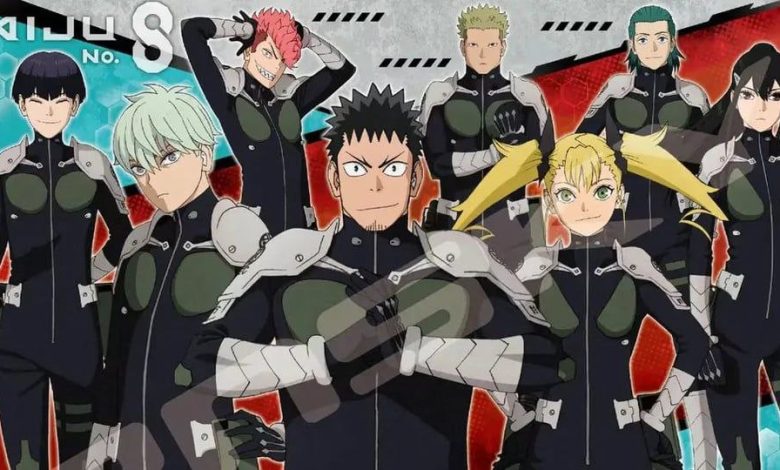
Kaiju No. 8: The Man Who Became the Monster He Vowed to Destroy
In a genre landscape where heroes are born special or inherit legendary power, a 2024 anime arrived with a premise that felt both shockingly fresh and classically resonant. Kaiju No. 8, based on Naoya Matsumoto’s explosive manga, asks a gripping question: What if the only one who could save humanity from giant monsters was a man who could turn into one?
This is the story of Kafka Hibino, a 32-year-old cleaning crew member for the professional monster-slaying organization, the Japan Defense Force. He’s a man who abandoned his childhood dream of joining the Force, now content with the mundane but vital work of disposing of monster carcasses after the real heroes are done. Yet, when a bizarre, parasitic kaiju infiltrates his body, Kafka gains the terrifying ability to transform into a humanoid kaiju of immense, uncontrollable power—dubbed Kaiju No. 8 by the authorities.
Now, he must conceal his monstrous alter ego while fighting to finally earn his place in the Defense Force, battling both the external kaiju threats and the internal fear of becoming the very thing he’s sworn to exterminate. Kaiju No. 8 is a masterful synthesis of classic tokusatsu (giant monster) thrills, modern shonen action, and surprisingly mature character drama. It explores themes of delayed dreams, societal value, and the monstrous potential within us all, all wrapped in blisteringly animated action sequences.
Information 

Kaiju No. 8
➻ Type :- TV
➻ Genres :- #Adventure, #Action, #Fantasy, #Drama
➻ Status :- Finished Airing (Season 1 & 2)
➻ Aired :- 2024-2025
➻ Language :- Tamil
➻ Episode :- 12 + 11
➻ Duration :- 23 min per ep
This guide will dissect the phenomenon. We’ll analyze Kafka’s unique journey as an older protagonist, delve into the military-scientific world of the Defense Force, unpack the series’ kaiju mythology, and explore why Kaiju No. 8 struck a chord as the next great shonen action epic.
Table of Contents
Prologue: The Dream Deferred – A Promise at 32
Kaiju No. 8 immediately establishes its unique tone by centering on an older, disillusioned protagonist. Kafka Hibino and his childhood friend, Mina Ashiro, made a pact to join the Japan Defense Force and fight kaiju together. Mina soared, becoming the legendary captain of the Third Division, hailed as the strongest force-user in history. Kafka failed the entrance exam, repeatedly. Now at 32, he works for Monster Sweeper Inc., a cleanup contractor, a job seen as the bottom rung of kaiju-related work. He’s physically fit but mentally resigned, his dream a distant memory.
This changes during a routine cleanup when a small, talking kaiju, later named “Ihara”, flies into his mouth. The kaiju symbiote fuses with Kafka, granting him the power to transform at will into a monstrously powerful being. However, this isn’t a clean power-up. The transformation is violent, painful, and risks his humanity.
Furthermore, the Defense Force’s sole mission is to eradicate kaiju. Kafka’s new power makes him Public Enemy No. 1. His revived dream now has a terrifying deadline: he must control his power, pass the Defense Force exams, and fight alongside Mina before the military discovers his secret and executes him. This setup creates a relentless double bind—the very power that could make him a hero also marks him for death.
Chapter 1: The Protagonist – Kafka Hibino, The Reluctant Monster
Kafka is a breath of fresh air in the shonen landscape, a hero whose struggles are as psychological as they are physical.
- The Older, Wiser Rookie: At 32, Kafka brings a lived-in perspective. He’s not a hot-headed teen; he’s pragmatic, weary, but possesses a deep-seated resilience. His maturity allows him to mentor younger candidates, and his life experience gives his determination a poignant weight. His journey is about a second chance, proving it’s never too late to chase a dream.
- The Duality of Man and Monster: Kafka’s internal conflict is visceral. The Kaiju No. 8 transformation isn’t a cool superhero change; it’s a body horror sequence of cracking bones and erupting flesh. He fears losing control, hurting innocents, and becoming the mindless beast he’s spent his life cleaning up after. His battle is for self-mastery, a constant negotiation between his human heart and the monster’s strength.
- Motivation: A Promise, Not Just Power: Unlike many protagonists who seek strength for its own sake, Kafka’s drive is deeply personal. It’s about honoring his childhood pact with Mina, standing by her side as an equal, and proving to himself that his years of failure weren’t in vain. This emotional core makes his struggle profoundly relatable.
Chapter 2: The World – The Japan Defense Force & Kaiju Science
The series builds a compelling, pseudo-realistic military framework around the kaiju threat.
- The Japan Defense Force (JDF): A highly structured, technologically advanced military organization. Divisions are led by powerful captains like Mina Ashiro. The Force uses “Numbers Weapon” suits powered by kaiju remains, allowing soldiers to combat giant threats with enhanced strength and weaponry. It’s a brutal meritocracy where only the strongest and most compatible survive.
- The Enlistment Exams: A major story arc is the grueling, high-stakes entrance exam for new recruits. It’s a crucible that tests combat skill, compatibility with combat suits, and mental fortitude against simulated and real kaiju attacks. Kafka, using carefully measured hints of his kaiju strength without transforming, must compete against prodigies half his age.
- Kaiju as a Natural (and Unnatural) Disaster: Kaiju are categorized by “Fortitude Levels” (like the terrifying Yoju-Bomb creatures). They are treated like recurring natural disasters, with evacuation protocols, dedicated news coverage, and a populace living in a state of resigned preparedness. The series explores the economic and social impact of this constant threat.
- The Science of Monsters: The JDF employs scientists and analysts like Ichikawa’s division to study kaiju biology, origins, and weaknesses. This adds a layer of sci-fi intrigue, suggesting the kaiju phenomenon is more complex than mere random attacks.
Chapter 3: The Cast – Comrades, Captains, and Rivals
Kafka’s journey is shaped by a dynamic ensemble cast.
- Mina Ashiro: The childhood friend turned living legend. Cold, focused, and unimaginably powerful, she is the idealized goal Kafka strives toward. Their relationship is the emotional anchor, a mix of unspoken history, professional respect, and Kafka’s lingering feelings.
- Leno Ichikawa: Kafka’s initial rival and eventual first true comrade. A stern, by-the-book rookie prodigy, Ichikawa initially disdains Kafka’s unserious demeanor. Witnessing Kafka’s selfless courage (while unaware of his secret) forces Ichikawa to reevaluate his rigid worldview. Their evolving bond is a cornerstone of the series.
- Kikoru Shinomiya: The elite daughter of the Defense Force’s stern Commander, a prodigy with immense natural power and a towering arrogance to match. She serves as a foil to Kafka—the born talent versus the hard-working late bloomer. Their rivalry-trust dynamic is fiercely entertaining.
- The Defense Force Leadership: Figures like the calm but deadly Captain Hoshina (vice-captain of the Third Division) and the intimidating Commander Shinomiya add layers of authority, competence, and mystery to the JDF’s structure.
Chapter 4: The Power System – Suits, Strength, and Symbiosis
Kaiju No. 8 features a unique, dual-layered power system.
- Numbers Weapon Combat Suits: The standard issue for JDF officers. These exoskeletons are forged from processed kaiju remains and powered by the user’s “Combat Power” (a measure of physical/mental fortitude and compatibility). Higher compatibility allows for greater percentage release of the suit’s power, with 100% being the theorized maximum. The suits are versatile, enabling unique weapons and abilities based on their kaiju source material.
- Kaiju No. 8’s Biology: Kafka’s power is organic and monstrous. In his transformed state, he possesses raw strength, durability, and regenerative abilities that far surpass standard suits. His signature move, the concentrated force punch he dubs “The Kaiju Killer,” is a manifestation of this brute power. His struggle is to harness this biology with human precision.
- Fortitude Levels & Kaiju Abilities: The kaiju themselves possess varied, often terrifying abilities based on their type—from explosive regeneration to sonic attacks. This keeps the threats dynamic and forces strategic thinking beyond simple punching.
Chapter 5: The Antagonists – Monsters Within and Without
The conflict is multi-faceted, extending beyond giant beasts.
- The Kaiju Threat: The ever-present, mindless force of destruction. From small Yoju to colossal Honju, they are a force of nature that must be stopped.
- The Human Antagonists – Fear and Bureaucracy: The most immediate threat to Kafka is the Japan Defense Force itself. Organizations within the Force, like the clandestine First Division, are dedicated to hunting down and eliminating kaiju threats at any cost, including Kafka once his secret is suspected. The system he wants to join is also his greatest hunter.
- Other Kaiju-Humans? The mystery of Kaiju No. 8’s origins and the parasitic “Ihara” suggest Kafka may not be the only human-kaiju hybrid, hinting at a larger conspiracy that could redefine the war.
Chapter 6: Themes – The Monster in the Mirror
Beneath the explosive action, Kaiju No. 8 grapples with mature, resonant themes.
- The Second Chance: Kafka embodies the universal desire for a do-over. His story validates perseverance and the idea that life experience can be its own kind of strength.
- Defining Monster vs. Man: The core philosophical question. Is a monster defined by its biology or its actions? Kafka must prove that his humanity—his compassion, his will, his promises—defines him, not his kaiju cells.
- The Burden of Leadership and Legacy: Seen through Mina and Commander Shinomiya, the series explores the weight of being the strongest, the sacrifices required to protect others, and the expectations placed on the next generation.
- Teamwork and Trust: Despite his secret power, Kafka cannot succeed alone. He must learn to trust and rely on Ichikawa, Kikoru, and others, emphasizing that true strength in the Defense Force is collective.
Chapter 7: The Anime Adaptation – A Visual and Sonic Spectacle
Produced by Production I.G, the anime adaptation is a technical marvel.
- Animation Quality: The action sequences are a highlight, blending fluid 2D character animation with stunning 3DCGI for the kaiju and combat suits in a way that feels cohesive and impactful. The transformation and battle sequences of Kaiju No. 8 are particularly visceral and awe-inspiring.
- Sound Design and Score: The soundscape is immense, from the crunching of kaiju flesh to the electric hum of Numbers Weapons. The score, composed by Yuta Bando, masterfully switches between haunting, melancholic themes for character moments and thunderous, orchestral bombast for combat.
- Voice Acting: The cast is exceptional. Masaya Fukunishi brings a perfect blend of weary warmth and desperate determination to Kafka, while Fairouz Ai’s cool, commanding performance as Mina Ashiro is iconic.
Chapter 8: Cultural Impact & The “Next Big Thing”
Kaiju No. 8 exploded onto the scene with record-breaking manga sales and immense anime hype.
- The Modern Tokusatsu Revival: It successfully translated the spirit of Japanese giant monster media (like Godzilla and Ultraman) into a serialized shonen narrative for a new generation.
- Appeal Across Demographics: The older protagonist attracted adult viewers, while the tight shonen action and cool monster designs captured the traditional fanbase. Its mature themes gave it a broader appeal.
- A New Standard for Action: The high production values of the anime set a new benchmark for what fans expect from major shonen adaptations, particularly in its seamless integration of 2D and 3D elements.
Conclusion: The Hero in the Beast’s Skin
Kaiju No. 8 is more than just a monster-fighting anime; it is a powerful metaphor for embracing the parts of ourselves we fear and using them for a greater purpose. Kafka Hibino’s journey is a testament to resilience, proving that heroism isn’t about being born with the right powers, but about having the unwavering will to do the right thing, even when that power threatens to consume you.
It masterfully balances heart-pounding kaiju battles with deep character drama, all while asking compelling questions about identity, duty, and redemption. For its groundbreaking protagonist, its impeccably crafted world, and its spectacular execution, Kaiju No. 8 has firmly cemented itself as a modern titan of the shonen genre.
It reminds us that sometimes, the strongest protector might look like the ultimate destroyer, and that the most human act of all is to fight for your dreams, no matter how many times you’ve fallen or how monstrous the path may seem. The roar of Kaiju No. 8 is not just a sound of destruction, but a declaration of a man’s unbreakable will.

Also Check
- Wind Breaker (Season 1-2) Tamil [480p 720p 1080p]
- Solo Leveling (Season 1-2) Tamil [480p, 720p, 1080p]
Final Summary 🪶
IMDb - 8.4
MyAnimeList - 8.3
8.4
Average
Kaiju No. 8 is a really good anime. The action is solid, but more than that, Kafka’s struggle feels genuine and easy to relate to. It doesn’t get boring and the fights feel heavy and impactful. Once you start it, you’ll get hooked easily.


2 Comments