
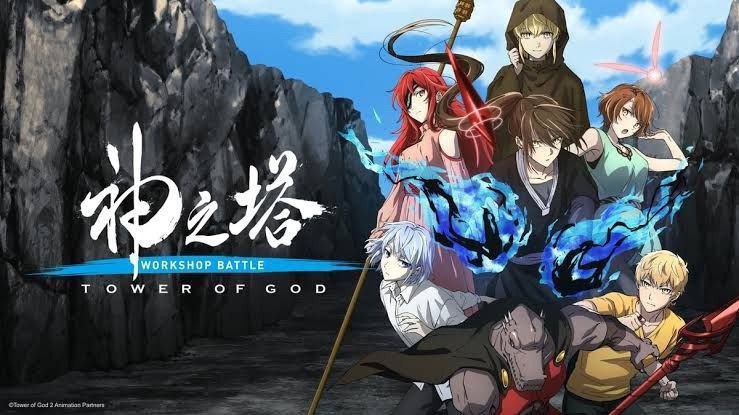
Tower of God: Ascending the Infinite – A Complete Guide to the Epic That Redefined Webtoons
Deep within the vast digital library of Korean webtoons, a singular, sprawling epic began its publication in 2010, forever altering the landscape of the medium. Its name is Tower of God (Sijip). Created by SIU (Slave. In. Utero), this monumental narrative is not merely a story; it is a meticulously constructed universe of dizzying scale, profound philosophical inquiry, and relentless, heart-wrenching drama.
When the anime adaptation premiered in Spring 2020 as the flagship title for Crunchyroll’s Original slate, it introduced a global audience to the first steps of a climb that has captivated millions for over a decade. Tower of God presents a world where an enigmatic, colossal Tower holds the key to everything one could desire—wealth, power, glory, even the answers to one’s deepest mysteries.
Those who enter are “Regulars,” chosen to climb its innumerable floors, each a world unto itself with unique rules, societies, and lethal tests. This is the story of Twenty-Fifth Bam, a boy who entered the Tower for one reason alone: to follow his only light, Rachel.
Information 

Tower of God
➻ Type :- TV
➻ Genres :- #Action, #Fantasy, #Mystery, #Adventure, #DarkFantasy
➻ Status :- Finished Airing (Season 1 & 2)
➻ Aired :- 2020-2024
➻ Language :- Tamil Dub
➻ Episode :- 13 + 26
➻ Duration :- 24 min per ep
This is your essential companion for this ascent. We will dissect the anime’s introductory arc, delve into the deep lore of the manhwa, analyze the series’ most compelling and controversial characters, and explore why Tower of God stands as a foundational pillar of modern fantasy storytelling.
Table of Contents
Prologue: The Door Opens – An Invitation to the Infinite
The opening premise of Tower of God is deceptively simple, yet infinitely alluring. A boy named Bam (“Night” in Korean) has lived his entire life trapped in a vast, dark cave, his sole comfort being the stories and presence of a girl named Rachel, who descended from a hole in the ceiling.
When Rachel, longing to see the stars, is chosen by the Tower and pulled into it, Bam does the impossible: he forces the Tower’s massive door open from the outside, an act of sheer will that should not be possible. He becomes an “Irregular”—a being from outside the Tower’s system, a wild variable that disrupts its preordained fate.
This opening establishes the core emotional and metaphysical engine of the series. Bam’s motivation is pure, personal, and human: find Rachel. But his existence is an anomaly that shakes the very foundations of a system governed by a mysterious entity known as the “Administrators” and overseen by the omnipotent “Guardians.” From the first step, Tower of God sets up a fundamental clash: the intimate desires of the individual versus the cold, absolute rules of an unfathomably vast cosmic structure.
Part I: The World as a System – Understanding the Tower’s Architecture
To ascend Tower of God, one must first understand its rules. The Tower is less a building and more a self-contained, stratified universe.
- The Purpose of the Climb: Regulars are chosen and granted entry to climb. At the top, it is said, anything they wish for will be granted. This promise drives countless souls into a relentless, often deadly competition. The Tower is a ruthless meritocracy where talent, power, and cunning determine survival.
- Floors and Tests: Each floor is a massive, unique ecosystem with its own culture, environment, and ruling family. To ascend, Regulars must pass a “Test” administered by a “Test Administrator” on each floor. These tests are rarely straightforward battles; they can involve complex games, psychological warfare, team strategy, or tests of character, emphasizing that brute force alone cannot guarantee ascent.
- Shinsu: The Divine Water: The Tower is filled with Shinsu, a mystical, omnipresent substance that is water, air, and the source of all power. “Wave Controllers” learn to manipulate Shinsu for attack, defense, and healing. One’s affinity and control over Shinsu are key measures of strength. The quality and density of Shinsu increase the higher one climbs, creating a natural selection of power.
- The Ranking System and Organizations: The Tower has a formal, continuously updated “Ranking” that measures an individual’s influence, power, and achievements. Major power blocs, like the “Great Families” (descendants of the legendary Irregulars who first conquered the Tower), the “Zahard Empire” (led by the immortal King who stopped his own climb), and the “Wing Tree” or “FUG” (Slayer Nation), shape the political landscape. Climbers often align with these factions for protection and advancement.
Part II: The Irregular and the Light – Bam and Rachel’s Dichotomy
At the heart of Tower of God is a character dynamic so potent and polarizing it has fueled over a decade of discussion.
- Twenty-Fifth Bam (Yoru): Bam begins as a pure, innocent, and fiercely loyal blank slate. His love for Rachel is absolute. As an Irregular, his potential is limitless, but his vulnerability is his humanity. The anime’s first season charts his traumatic awakening: the pain of betrayal, the struggle to trust, and the first terrifying awakenings of his latent, monstrous power. His journey is one of forging a new self, building bonds with new companions, and grappling with the destiny his unique status forces upon him. He is the ultimate underdog with the ultimate hidden advantage.
- Rachel – The Most Controversial Figure: Rachel is the narrative’s masterstroke. Presented initially as a damsel and inspiration, her shocking betrayal of Bam redefines the entire story. She is not powerful, not a chosen one, and seethes with a bitter, all-too-human envy. Rachel represents the un-chosen, the ordinary person who watches a destined hero rise and is willing to commit unspeakable acts to steal that destiny for herself. She climbs not through talent, but through manipulation, alliances with dark forces, and a pathological belief in her own right to be the protagonist. Her existence asks a brutal question: In a world of monsters and chosen ones, what is the price of ambition for someone with no special gift?
Part III: The First Test – Companions and Rivals on the 2nd Floor
The anime’s first season adapts the “Crown Game” and “Hide-and-Seek” arcs on the 2nd Floor, introducing the core cast that will shape Bam’s early ascent.
- Khun Aguero Agnes: The brilliant, blue-haired strategist from one of the Great Families. Cynical and calculative, he sees in Bam both a fascinating anomaly and a genuine friend. Khun becomes Bam’s primary tactician, protector, and guide through the Tower’s politics, using his intellect and Light Bearer abilities to manipulate the battlefield.
- Rak Wraithraiser: The fierce, direct-speaking crocodile-like humanoid (Native One) from the Rak race. A powerful Spear Bearer, Rak’s simple philosophy (“Turtles” are strong people to hunt) and unwavering loyalty provide brute-force reliability and unexpected comedic relief. He forms the third pillar of the main trio with Bam and Khun.
- Endorsi Jahad: A Princess of Jahad, chosen for her power and granted a piece of the King’s blood. Haughty and dangerous, she is initially a formidable rival. Her complex character, marked by a painful past and a growing, awkward affection for Bam, makes her a fan favorite and a key ally.
- Hatz, Shibisu, Anaak, and Others: The larger group that forms during the tests showcases the Tower’s diversity. Each has their own motivations—honor, revenge, knowledge, survival—creating a fragile but compelling team dynamic where alliances are constantly tested.
Part IV: The Shadows Behind the Throne – FUG, Jahad, and the Great Game
Beyond the tests, Tower of God is a deep political thriller. The manhwa expands far beyond the anime to reveal the titanic forces at play.
- FUG (Slayer Nation): The primary antagonistic force introduced early on. A secretive, fanatical organization dedicated to overthrowing King Jahad and the Great Families. They see Bam, the Irregular, as a prophesied “Slayer” candidate, a weapon to be molded and controlled. Their manipulation of Bam and Rachel drives much of the early series’ conflict, forcing Bam to confront the dark uses of his power.
- King Jahad and the Great Families: The immortal king who halted his climb and established the current empire. He is a distant, god-like figure whose policies (like the Princess system) create systemic cruelty. The 10 Great Family Heads, his former companions, are beings of near-mythical power, each governing their own domains with conflicting agendas.
- The Workshop and Other Entities: The Workshop, a neutral, hyper-advanced technological organization that creates weapons and conducts mysterious experiments, represents another axis of power. The story continually introduces new factions, making the Tower feel like an endlessly complex, living political ecosystem.
Part V: Themes – The Soul Within the Brutal Climb
Tower of God uses its fantastical setting to explore profound, often dark, human themes.
- Destiny vs. Free Will: Are the Irregulars like Bam and the Family Heads destined to change the Tower, or do they forge their own path? Rachel’s entire struggle is a rebellion against a fate that seemingly ignored her.
- The Corruption of Systems: The Tower’s systems—Jahad’s Empire, the Ranking, the Princess selection—are shown to be deeply flawed, perpetuating inequality, violence, and emotional ruin. The climb is a metaphor for social mobility within a rigged game.
- The Nature of Betrayal and Trust: Betrayal is a constant. Bam’s journey is learning to trust again after Rachel, while also learning that trust in the Tower is a currency to be spent wisely. The series asks what bonds can survive in a world where everyone is competing for a single prize.
- Envy and Ambition: Rachel is the purest embodiment of these traits. Her character is a deep, uncomfortable study of how feelings of inadequacy can curdle into villainy, challenging the reader’s need for a traditionally sympathetic protagonist.
Part VI: The Manhwa Phenomenon and Art Evolution
The anime is merely the first step. The true scale of Tower of God is in the ongoing webtoon.
- A Webtoon Pioneer: Alongside works like Noblesse, Tower of God was instrumental in popularizing the long-form, full-color webtoon format globally. Its success paved the way for the current wave of webtoon adaptations.
- SIU’s Evolving Artistry: The art begins in a relatively simple style but undergoes a dramatic transformation. Over hundreds of chapters, SIU’s linework becomes more detailed, the panel compositions cinematic and dynamic, and the use of color and digital effects for Shinsu and battles becomes breathtakingly immersive. The art’s growth mirrors the story’s escalating scale.
- The Hiatus and the Legend: SIU’s well-documented health struggles, leading to hiatuses, have only deepened the loyalty of the fanbase. The commitment to this life’s work is palpable, making each new chapter a communal event.
Part VII: The Anime Adaptation – Reception and Future
The 2020 anime, produced by Telecom Animation Film and directed by Takashi Sano, served as a potent gateway drug.
- A Stylistic Interpretation: The anime took creative liberties, particularly with its ethereal, synth-heavy score by Kevin Penkin, which divided some purists but created a unique and memorable atmosphere. The animation captured the chaos of the tests and the emotional beats effectively.
- Global Breakthrough: It successfully introduced the complex world to a mainstream anime audience, topping streaming charts and creating a surge of new readers for the webtoon.
- The Long-Awaited Season 2: Announced after years of fervent hope, Season 2 is poised to adapt the iconic “Workshop Battle” and “Hell Train” arcs—saga where the plot deepens exponentially, powers skyrocket, and the true stakes of the Tower are laid bare. The anticipation is immense.
Conclusion: The Never-Ending Ascent
Tower of God is more than a power fantasy; it is an epic of mythological proportions. It is a story about wanting, about the sacrifices made for desire, and about what we become on the long, lonely road to our dreams. It presents a world that is brutally unfair, yet filled with moments of breathtaking loyalty, sacrifice, and love.
Bam’s climb is a mirror to our own struggles against the systems we live in, the betrayals we face, and the hope we cling to. Whether through the anime’s compelling introduction or the manhwa’s staggering depth, Tower of God offers an unparalleled journey. The door is open. The tests await. The Tower, with all its beauty, horror, and mystery, beckons. All you must do is take the first step and begin your climb.

Also Check
- My Hero Academia (Season 1-7) Tamil [480p 720p 1080p]
- The Magical Girl and the Evil Lieutenant Used to Be Archenemies (Season 01) Tamil [480p 720p 1080p]
Final Summary 🪶
IMDB - 7.4
MyAnimeList - 7.6
7.5
Average Score
Tower of God feels mysterious right from the start. The world, rules, and tests slowly pull you in and keep you curious. Characters like Bam and Khun make the journey interesting. If you enjoy slow-building fantasy with twists, this one’s worth watching.


One Comment