
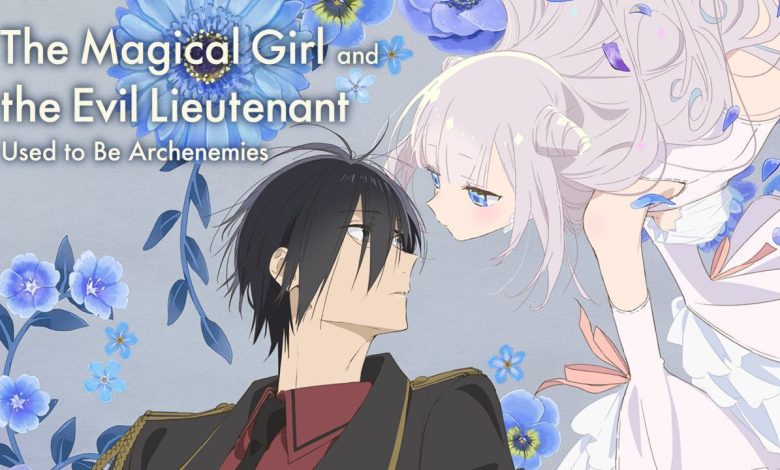
The Magical Girl and the Evil Lieutenant Used to Be Archenemies: When Sparks of Battle Become Sparks of Love
In a landscape brimming with high-stakes fantasy and epic confrontations, a uniquely charming and witty anime premiered in 2025 to capture the hearts of rom-com and fantasy fans alike. The Magical Girl and the Evil Lieutenant Used to Be Archenemies is a title that delightfully spoils its own premise, promising a journey not of will they or won’t they, but of how on earth did they get here? This series masterfully blends the glittering aesthetics of the magical girl genre with the brooding intrigue of a dark fantasy organization, all filtered through the hilariously awkward lens of an office romance between two utterly smitten ex-combatants.
It’s a story about what happens after the epic battles fade, when the magical girl hangs up her tiara for a briefcase and the evil lieutenant trades world-domination plans for quarterly reports, only to find their greatest challenge isn’t defeating each other, but navigating the complexities of love, work, and their shared, explosive past. This comprehensive guide will be your grimoire to this enchanting series.
Information 

The Magical Girl and the Evil Lieutenant Used to Be Archenemies
➻ Type :- TV
➻ Genres :- #Romance, #Comedy, #Fantasy, #MagicalGirl, #EnemiesToLovers
➻ Status :- Finished Airing (Season 1)
➻ Aired :- 2024
➻ Language :- Tamil Dub
➻ Episode :- 12
➻ Duration :- 24 min per ep
We will explore its clever genre subversions, analyze the delightful dynamic between its leads, break down its workplace comedy brilliance, and discover why The Magical Girl and the Evil Lieutenant Used to Be Archenemies is the most refreshing romantic comedy of the season.
Table of Contents
Prologue: From Battlefield to Watercooler – A Premise Built on Ironic Contrast
The central conceit of The Magical Girl and the Evil Lieutenant Used to Be Archenemies is its engine of comedy and heart. Years ago, the radiant “Cure Blossom,” defender of love and justice, clashed in weekly, city-destroying battles with the sinister “Lieutenant Garagon,” chief strategist of the nefarious “Void Legion.” Their rivalry was legendary, a dance of dazzling sparkles against calculated shadow magic.
The story begins in the present, where both factions have brokered a tense but stable peace treaty. Mirai Aoyama (formerly Cure Blossom) now works a middling office job at a generic corporation, her magical girl days a secret, cherished, yet distant memory. Enter her handsome, serious, and highly competent new department head: Sousuke Tsuchiya. He is, of course, the former Lieutenant Garagon, seeking a quiet civilian life.
The irony is immediately, painfully delicious. Two individuals who once dedicated their existence to the other’s utter defeat now sit mere desks apart. They must navigate mind-numbing spreadsheets, tedious meetings, and office politics, all while suppressing the instinct to unleash celestial or void magic during a budget review. This perfect setup—the ultimate enemies-to-co-workers-to-lovers scenario—allows the series to mine humor and tension from the stark contrast between their apocalyptic past and their painfully mundane present.
Chapter 1: Character Deep Dive – The Heroine and Villain, Deconstructed
The series thrives on the rich inner lives of its two leads, who are far more than their former archetypes.
Mirai Aoyama (Formerly Cure Blossom): The Sun Adjusting to Shade
- The Reluctant Retirement: Mirai embodies the post-hero adjustment. She misses the purpose, excitement, and clarity of being a magical girl. Office life feels small and unfulfilling. She is kind, optimistic, and deeply empathetic, but carries a subtle loneliness, feeling out of place in a world that doesn’t know her true, radiant self.
- Legacy in the Cubicle: Her magical girl habits peek through in hilarious ways—a tendency to give overly earnest pep talks, a habit of striking a transformation pose when she stretches, and an unwavering (if misplaced) determination to solve all problems with sheer positivity. Her conflict is one of finding a new identity and purpose where her greatest power is no longer her magic, but her enduring heart.
- The Spark of Recognition: From the moment Sousuke walks in, her world is upended. The recognition is instant, thrilling, and terrifying. Her journey is learning to see the man behind the monster mask, reconciling her history of combat with the burgeoning feelings for a diligent, surprisingly gentle superior.
Sousuke Tsuchiya (Formerly Lieutenant Garagon): The Moon Seeking Warmth
- The Strategist in Peace: Sousuke is the picture of repressed efficiency. His villainous past was built on cold logic, intricate schemes, and a philosophical belief in entropy. In the corporate world, these traits make him an unnervingly effective manager. He is calm, collected, and intimidatingly competent.
- Hidden Depths and Devotion: The series slowly reveals that his “evil” was never rooted in malice, but in a warped, solitary ideology. Furthermore, flashbacks hint that his obsession with battling Cure Blossom was never purely tactical. There was always a layer of profound fascination, respect, and a twisted form of courtship in their duels. His present-day actions—subtly covering for her mistakes, bringing her the coffee she likes, working late to help her—are the quiet, corporate-world translations of his former intense focus.
- The Burden of the Past: Sousuke grapples with guilt and the difficulty of atonement. He genuinely desires a normal life but fears his past makes him unworthy of connection, especially with the literal embodiment of light he once fought. His romantic tension stems from this push-pull between deep desire and self-imposed exile.
Chapter 2: The Comedy of Contrast – Genre Satire at Its Finest
The Magical Girl and the Evil Lieutenant Used to Be Archenemies excels as a satire of both magical girl and villain tropes, deriving brilliant comedy from their collision with banality.
- Magical Girl PTSD in the Break Room: Mirai’s reflexes are tuned for interdimensional threats, not printer jams. The show finds endless humor in her applying magical girl logic to office problems. (“If we all just believe in the power of teamwork, this quarterly report will write itself!”)
- Villainous Logic for Management: Sousuke’s strategies are now used for corporate restructuring. He refers to market competitors as “the enemy faction,” calls brainstorming sessions “war councils,” and views clinching a contract as a “successful conquest.” His deadpan delivery of these lines, completely serious, is a consistent highlight.
- Flashbacks as Comic Foils: The series uses flashbacks not just for lore, but for sharp comedic contrast. A scene of them awkwardly sharing an elevator in silence is juxtaposed with a flashback of them hurling universe-altering attacks at each other from across a crumbling skyscape. The dissonance is the joke.
- Supporting Cast as the Straight Men: Their oblivious coworkers provide the perfect normalcy to bounce the absurdity off of. Their gossip about the “weird tension” between Mirai and Sousuke, completely unaware it’s the residue of a mystical war, adds another layer of humor.
Chapter 3: The Romance – A Slow Burn Forged in Shared History
The romantic progression in The Magical Girl and the Evil Lieutenant Used to Be Archenemies is uniquely compelling because it’s not about discovery, but about re-contextualization.
- The Language of Battle as Love Language: Their past interactions are re-framed. A villainous monologue about extinguishing her light is remembered as a confession of being blinded by her radiance. A magical girl’s cry to “never give up on people’s hearts” is heard as a personal plea to him. The show brilliantly rewires their entire history as a protracted, violently clumsy courtship.
- Modern Mundanity as Intimacy: Their growing closeness is built in the quiet moments of the present: sharing an umbrella in the rain, covering the same shift, developing an inside joke about the accounting department. These ordinary acts carry the weight of their extraordinary past, making them profoundly meaningful.
- The “Will They Get Caught?” Tension: A major source of suspense is their shared secret. The threat of exposure—to their coworkers, or worse, to their former allies who might see their fraternization as treason—adds a thrilling layer of risk to every lingering glance and covert conversation.
Chapter 4: World-Building – The Mechanics of a Post-Treaty World
The series smartly builds a logical framework for its premise, giving stakes to the personal story.
- The Peace Treaty: The armistice between the “Luminous Guard” and the “Void Legion” is depicted as a fragile, bureaucratic reality. There are rules, oversight committees, and former combatants in rehabilitation programs. This makes the setting feel lived-in and raises the stakes of Mirai and Sousuke’s relationship.
- The Fate of Other Characters: The show introduces other former magical girls and villains adjusting to civilian life. Some have embraced it, some run themed cafes, and others are deeply lost. This expands the world and provides mirrors to our leads’ experiences.
- The Threat of the Past: Hints suggest that not everyone is happy with the peace. Hardliners on both sides could reappear, threatening to pull Mirai and Sousuke back into their old roles and forcing them to choose between their new love and their old duties.
Chapter 5: Themes – Identity, Peace, and the Self Beyond the Role
Beneath the sparkles and comedy, the series explores resonant themes.
- Identity After Purpose: What are you when the defining aspect of your life is over? Both Mirai and Sousuke struggle with this. The series argues that identity is fluid and can be rebuilt, not on the ashes of the old, but incorporating its lessons into a new, integrated self.
- The Harder Challenge of Peace: It posits that making peace is easier than living in peace. The drama of battle is replaced by the subtle, chronic anxiety of adjustment and the hard work of building something ordinary, which is ultimately more rewarding.
- Understanding the “Other”: At its core, it is a story about radical empathy. Mirai and Sousuke are literally from opposite sides of a cosmic war. Their love story is the ultimate bridge across ideological chasms, proving that understanding is possible when you see the person behind the power.
Chapter 6: Artistic Style and Direction – Blending Aesthetics
The anime’s production reinforces its core contrasts.
- Visual Design: Mirai’s world is painted in warm, bright, slightly nostalgic colors. Sousuke’s palette is cooler, with sharper angles and shadows. When they share a scene, these aesthetics begin to blend, mirroring their emotional convergence.
- Flashback vs. Present Animation: The flashbacks are rendered with the dynamic, effects-heavy sakuga of a classic battle anime. The present is animated in a softer, more grounded style typical of slice-of-life rom-coms. The switch between them is visually striking and reinforces the tonal joke.
- Voice Acting Nuance: The seiyuu performances are key. The actors adeptly switch between their characters’ “battle modes” (heroic and booming, villainous and silky) and their “civilian modes” (flustered and gentle, stoic and soft), highlighting the duality of their lives.
Conclusion: A Triumph of Charm and Heart
The Magical Girl and the Evil Lieutenant Used to Be Archenemies is a masterclass in taking a high-concept premise and executing it with impeccable character focus, witty writing, and genuine emotional warmth. It proves that the most compelling battles are not always fought with magic, but with the courage to be vulnerable, to forgive, and to build a new future from the pieces of a fractured past.
It is a love letter to anyone who has ever felt defined by a past role, a hilarious send-up of genre tropes, and, above all, a profoundly sweet and satisfying romance. The series reminds us that sometimes, a happy ending isn’t about vanquishing evil in a blaze of glory, but about finding peace, connection, and maybe even love with a former enemy at the desk next to you. For its brilliant execution of the enemies-to-lovers trope and its heartfelt exploration of life after the final battle, The Magical Girl and the Evil Lieutenant Used to Be Archenemies is not just a great rom-com or a clever fantasy—it’s a magical experience in its own right.

Also Check
- Tower of God (Season 1-2) Tamil [480p 720p 1080p]
- The Ancient Magus’ Bride (Season 01) Tamil [480p 720p 1080p]
Final Summary 🪶
IMDB - 7.6
MyAnimeList - 9.2
8.4
Average Score
The Magical Girl and the Evil Lieutenant Used to Be Archenemies is oddly cute and refreshing. It flips the usual magical-girl setup into a soft rom-com with charm. The chemistry is simple but works really well. If you want something light, sweet, and different, this one’s a nice watch.


One Comment