
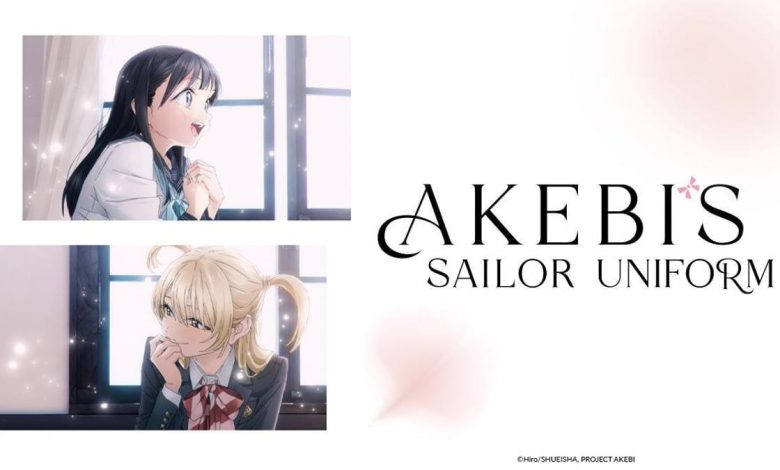
AKEBI’S SAILOR UNIFORM: The Fabric of Anime Storytelling and Cultural Identity
In the vibrant, visual language of anime, few icons are as instantly recognizable, deeply evocative, and narratively versatile as the sailor uniform, or sērā fuku. While often generalized, the specific archetype of AKEBI’S SAILOR UNIFORM a term evoking a standard, idealized design of crisp lines, contrasting colors, and symbolic ribbons—transcends mere costuming.
Information 

Akebi’s Sailor Uniform
➻ Type :- TV
➻ Genres :- #school, #SliceofLife, #emphasizing, #heartfelt
➻ Status :- Finished Airing (Season 1)
➻ Aired :- 2022
➻ Language :- Tamil
➻ Episode :- 12
➻ Duration :- 24 min per ep
It is a cultural code, a psychological blueprint, and a dynamic storytelling device. This garment, seen on countless characters from Sailor Moon to Neon Genesis Evangelion, does not simply clothe a character; it situates them within a specific world of meaning, expectation, and often, rebellion.
Table of Contents
The Uniform in the Frame
Open almost any anime set in a Japanese school, and you will be met with a sea of AKEBI’S SAILOR UNIFORM. Its components are now legendary: the wide sailor collar laid over the torso, the contrasting necktie or ribbon, the pleated skirt, and the often-accompanying knee-high socks or loose socks.
This is not a random aesthetic choice. From the moment it appears on screen, it performs immediate narrative labor. It tells the viewer the character’s age group, their social context (the school as a microcosm), and establishes a baseline of conformity.
The story then often becomes about how the character interacts with, adheres to, or rebels against the very system this uniform represents. AKEBI’S SAILOR UNIFORM is the canvas upon which stories of identity, pressure, romance, and supernatural conflict are painted. Understanding its depth is key to unlocking layers of meaning in a vast swath of anime history.
From Naval Decks to School Halls – A Historical Voyage
The journey of AKEBI’S SAILOR UNIFORM from practical naval gear to cultural icon is a fascinating tale of cross-cultural exchange and adaptation.
- Western Origins: The design originates in European, particularly British, naval uniforms of the 19th century. The distinctive wide collar (originally to protect the jacket from tar and dirt) and simple, durable design were hallmarks of sailors’ practical workwear.
- Adoption in Japan: In the late 19th century, during the Meiji era’s rapid modernization and Westernization, Japan looked to the West for new institutional models. The sailor uniform was adopted, notably by the Heian Jogakuin (a Christian girls’ school) in 1920, championed by principal Elizabeth Lee. Its virtues were seen as egalitarian (erasing visible class differences), hygienic, and symbolizing a modern, active lifestyle for young women.
- Post-War Proliferation: After World War II, the sailor uniform became the standard for middle-school girls across Japan. Its association with youth, innocence, and a collective national identity solidified. It was during this post-war boom of manga and anime that the uniform began its migration from reality into the realm of popular fiction, carrying all its cultural baggage with it.
The term “AKEBI’S SAILOR UNIFORM” in this context serves as a conceptual placeholder for this standardized, culturally-loaded design. It’s the “default” uniform that artists and audiences intrinsically understand, named here as if from a canonical supplier to the anime world itself.
Semiotics of the Sailor Suit – Decoding the Visual Language
Every element of AKEBI’S SAILOR UNIFORM carries symbolic weight, contributing to a complex visual language.
- The Sailor Collar: The most defining feature. It frames the face, drawing attention to the character’s expressions. Its wide, flat shape can symbolize wings, hinting at freedom or fantasy, but its rigid structure also suggests constraint, like a yoke.
- The Ribbon or Necktie: A focal point of color and personality. A neatly tied ribbon signifies conformity, order, and diligence. A loose, untied, or uniquely tied ribbon is one of the smallest yet most powerful acts of rebellion in anime, signaling a carefree, rebellious, or distracted nature.
- The Pleated Skirt: Symbolizes movement, youth, and femininity. Its length is a constant source of coded messaging—regulation length for obedience, shortened for rebellion, confidence, or a more provocative character archetype.
- The Color Scheme: The classic navy blue and white contrast carries its own meaning. Navy evokes seriousness, duty, and the “deep sea” of the collective. White represents purity, innocence, and a blank slate. Variations (like the gray/white in Evangelion or the burgundy in some shows) tweak this mood, introducing melancholy, aristocracy, or uniqueness.
- Socks and Shoes: The transition from standard socks to loose socks (baggy, slouching socks) in the 1990s marked a huge teen trend and became an instant visual shorthand for a certain fashionable, sometimes rebellious, girlish identity.
Together, these elements make AKEBI’S SAILOR UNIFORM a suit of social armor. It protects via belonging but also restricts through expectation. A character’s relationship with each component speaks volumes before they utter a word.
Archetypes and the Uniform – Character as Construction
AKEBI’S SAILOR UNIFORM is so potent that it helps define classic anime character archetypes simply by how it is worn.
- The Model Student: The uniform is immaculate. Every pleat is sharp, the ribbon is perfect, the collar lies flat. Think: Kaguya Shinomiya from Kaguya-sama: Love is War in her public persona. The uniform is her armor of perfection.
- The Rebellious Outsider: The uniform is modified, untucked, unbuttoned, or accessorized. The skirt is shorter, the ribbon is missing or replaced. This is the uniform of Haruko Haruhara from FLCL or Ryuko Matoi’s altered uniform in Kill la Kill (before it becomes sentient). It’s a declaration of war on the system.
- The Eccentric or Unaware: The uniform is worn messily, with stains, or in a state of charming disarray. It suggests a mind occupied with higher things (invention, art, the supernatural) or a gentle, clumsy personality. Examples include Mei Misaki from Another (whose uniform is part of her ghostly mystery) or the creatively messy artists in Hidamari Sketch.
- The Warrior in Disguise: Here, AKEBI’S SAILOR UNIFORM becomes the ultimate camouflage. The unassuming schoolgirl is secretly a magical soldier, mecha pilot, or assassin. The contrast between the innocent uniform and the deadly power within is the core appeal of series like Sailor Moon, Lycoris Recoil, and Puella Magi Madoka Magica.
Case Studies – The Uniform in Iconic Narrative Action
To see the true power of AKEBI’S SAILOR UNIFORM, we must examine its role in specific, landmark series.
- Sailor Moon (Usagi Tsukino): This is the transformational apex. Usagi’s ordinary, slightly rumpled school uniform is her “civilian” identity. Her magical transformation sequence begins with the uniform dissolving, symbolically shedding her mundane, constrained self to become the powerful, legendary Sailor Soldier. The sailor uniform here is literally the source of her power’s aesthetic, directly linking the everyday Japanese schoolgirl to a cosmic warrior legacy.
- Neon Genesis Evangelion (Rei Ayanami & Asuka Langley Soryu): Hideaki Anno uses the uniform (the gray Tokyo-3 variant) as a tool of profound psychological deconstruction. Rei’s uniform is worn with an unsettling, robotic precision, mirroring her disconnected, manufactured identity. Asuka’s is worn with aggressive pride, a part of her competitive, ego-driven armor. Shinji’s discomfort is palpable in his. The uniform in Evangelion doesn’t symbolize teenage fun; it symbolizes the institutional and psychological pressures crushing the children forced to wear it.
- Kill la Kill (Ryuko Matoi): This series makes the uniform the literal antagonist. The oppressive, life-sucking “Goku Uniforms” of Honnouji Academy are a hyper-exaggerated metaphor for fascistic conformity and social hierarchy. Ryuko’s sentient sailor uniform, Senketsu, represents a symbiotic, consent-based relationship with power, a direct rebuttal to the forced conformity of the standard issue. It is the ultimate meta-commentary on AKEBI’S SAILOR UNIFORM itself.
- The Melancholy of Haruhi Suzumiya (The SOS Brigade): Haruhi’s imposition of her own designed sailor uniform on the SOS Brigade is an act of pure world-building desire. It’s not a school mandate; it’s a declaration of a new, exclusive social system of her own making. Wearing it signifies membership in her bizarre reality.
Subversion and Deconstruction – The Modern Uniform
Contemporary anime frequently plays with and subverts the traditions of AKEBI’S SAILOR UNIFORM to explore modern themes.
- Gender Fluidity and Expression: Series like Love Live! and Revolutionary Girl Utena use the uniform to explore gender. Utena wears a male gakuran uniform as an act of rejecting princesshood, while still engaging with femininity. Male characters in idol groups adapt sailor-inspired outfits, blurring traditional lines.
- The Uniform as Trauma: In Puella Magi Madoka Magica, the magical girls’ outfits, often sailor-style, become pretty prisons. They are the visual manifestation of a contract that leads to suffering and death, brutally inverting the “magical girl” trope the uniform typically signifies.
- The Absence of the Uniform: Some notable series pointedly avoid it. Hyōka uses a more generic blazer design, emphasizing its realistic, low-key setting. Jujutsu Kaisen uses unique jujutsu tech uniforms, prioritizing individual power and a non-standard institution. This absence is itself a statement.
Beyond Japan – Global Perception and Fandom
AKEBI’S SAILOR UNIFORM is a key part of anime’s global visual export. For international fans, it is often one of the first and most enduring symbols of the medium.
- Cosplay: The sailor uniform is a cornerstone of cosplay due to its iconic status and relative simplicity to replicate. Wearing it is an act of embodying an archetype and participating in anime culture.
- Fashion Influence: The “sailor style” has influenced global fashion trends, appearing in high fashion and streetwear, often divorced from its academic meaning but retaining its aesthetic of youthful, structured cuteness.
- Misinterpretation and Fetishization: It’s crucial to acknowledge that the uniform’s association with youth and innocence has also led to its fetishization outside of Japan, a distortion of its complex original cultural context. Understanding the uniform’s narrative depth is an antidote to this shallow reading.
Conclusion: The Eternal Uniform
AKEBI’S SAILOR UNIFORM is far more than a nostalgic relic or a simple animation shortcut. It is a dynamic, living symbol within anime’s storytelling toolbox. It carries the weight of history, the pressures of society, and the dreams of individuality. It can represent the comfort of belonging or the agony of constraint; the disguise of the mundane or the transformation into the extraordinary.
From Usagi Tsukino’s magical metamorphosis to Shinji Ikari’s psychological shroud, from Ryuko Matoi’s rebellious battle gear to the standardized conformity of countless classroom backgrounds, AKEBI’S SAILOR UNIFORM remains the foundational garment of anime’s exploration of adolescence.
It is a uniform, yes, but its true function is as a mirror—reflecting back at us the eternal struggles of growing up, finding one’s identity, and deciding whether to wear the system we are given or to stitch together a suit of our own.
As long as anime tells stories about youth, society, and the search for self, the crisp lines and flowing ribbons of AKEBI’S SAILOR UNIFORM will continue to be a vital part of its visual and narrative fabric.

Also Check
- 365 Days to the Wedding (Season 01) Tamil [480p 720p 1080p]
- Bucchigiri?! (Season 01) Tamil [480p 720p 1080p]
Final Summary 🪶
IMDB - 7.2
MyAnimeList - 7.6
7.4
Average Score
Akebi’s Sailor Uniform is a really sweet and relaxing anime. It’s all about small moments, friendships, and enjoying everyday life. The animation is soft and beautiful, and it just feels warm to watch. Perfect if you want something calm and wholesome.


2 Comments