
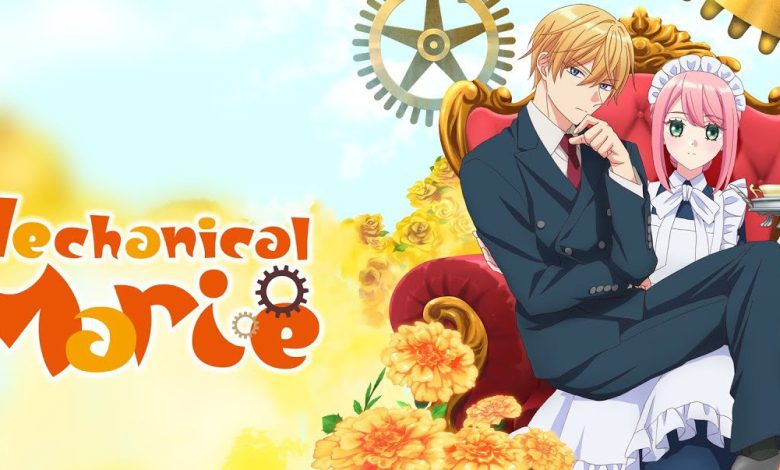
Mechanical Marie: When Clockwork Beats a Human Heart – The Steampunk Anime That Redefined Humanity
In an era of digital gloss and virtual fantasy, a 2025 anime dared to find its soul in the analog, the tactile, and the whirring heart of a bygone future. Mechanical Marie (Kikaijikake no Marie) is a visual and narrative symphony of brass, steam, and profound emotion.
Set in a breathtakingly realized alternate-history Belle Époque Europe, it tells the story of Marie, a young woman living alone in her family’s sprawling, decaying clock tower workshop, and the mysterious, lifelike automaton named Vivienne who enters her life. But this is not a simple tale of human and machine. It is a poignant exploration of grief, memory, the scars of war fought with terrible mechanical weapons, and the quiet revolution of choosing to heal rather than destroy.
With its meticulously hand-drawn aesthetic, complex characters, and philosophical depth, Mechanical Marie transcends its steampunk trappings to deliver a timeless story about the ghosts we carry and the families we build from the spare parts of our lives.
Information 

Mechanical Marie
➻ Type :- TV
➻ Genres :- #Romance, #Comedy, #Action, #SciFi, #Mystery
➻ Status :- Finished (Season 1)
➻ Aired :- 2024
➻ Language :- Tamil Dub
➻ Episode :- 12
➻ Duration :- 24 min per ep
This guide will be your blueprint to this exquisite world. We will wind the mainspring on Marie and Vivienne’s relationship, dissect the series’ stunning art deco-meets-steampunk design, analyze its anti-war themes, and uncover why Mechanical Marie has been hailed as an instant classic of atmospheric, character-driven anime.
Table of Contents
Prologue: A Wound in the World – The Great Clockwork War
The world of Mechanical Marie is built upon a foundational trauma: the Great Clockwork War. Decades before our story begins, the nations of Europa, in a fever of industrial advancement, turned their genius for mechanics toward destruction.
They built “Automatons of Mass Purpose”—not simple tools, but sentient, walking engines of war. The conflict was brief, apocalyptic, and left deep scars on the continent and its collective soul. A fragile peace now exists, built on the uneasy taboo of advanced automaton creation and a widespread, cultural mechanophobia.
Our story begins in the neutral, alpine nation of Horologia. Marie Claire d’Autan is the last descendant of a legendary family of “Horologists”—master engineers and artists of clockwork. Living in isolation in her family’s iconic, gear-filled tower in the city of Verge, she repairs clocks and mundane mechanisms, haunted by the legacy of her grandfather, a pacifist who refused to build weapons and was ostracized for it.
The world outside views advanced automata with suspicion and fear, relics of a terrible mistake. Into this quiet, lonely existence comes a delivery: a large, ornate crate addressed to her grandfather. Inside, powered by a mysterious and impossibly advanced “Crystal Heart,” is Vivienne—an automaton of such breathtaking artistry and subtle humanity that she blurs the line between machine and being. Her activation sets in motion a story about confronting the past, challenging the present, and redefining the future.
Chapter 1: The Protagonist – Marie Claire d’Autan, The Healer of Broken Things
Marie is a protagonist defined by silence, skill, and a sorrow she carries in her tools.
- The Language of Gears and Springs: Orphaned and solitary, Marie communicates more easily with machines than people. She understands their logic, their failings, and the quiet satisfaction of restoring function. Her workshop is her sanctuary, a cathedral of ticking clocks that mark time but also seem to hold it at bay. Her technical genius is inherited, but her philosophy is her own: she fixes; she does not invent weapons.
- The Weight of Legacy: Marie lives in the shadow of her grandfather’s defiance and the family’s faded prestige. She is caught between reverence for his pacifist ideals and the practical reality of being a young woman in a society that distrusts her craft. Her initial fear of Vivienne is not just of the unknown, but of awakening the very controversies that ruined her family.
- From Technician to Guardian: Marie’s journey begins with seeing Vivienne not as a machine, but as a responsibility, and eventually, a person. Her skills are tested not in building weapons, but in understanding, maintaining, and protecting a being whose existence is illegal and revolutionary. She must evolve from a repairer of objects to a guardian of life.
Chapter 2: The Miracle – Vivienne, The Soul in the System
Vivienne is the series’ central miracle and mystery. She is not a cold robot, but an entity that challenges every preconception about automata.
- The Aesthetics of Life: Her design is a masterpiece of the “Gilded Mechanique” style—elegant brass filigree, porcelain-like composite panels, and movements that are whisper-quiet and fluid. Her expressions, conveyed through subtle shifts in her eye-lenses and body language, are profoundly emotive. She is art given motion.
- The Enigma of the Crystal Heart: The source of her power and her nascent consciousness is a technology believed lost or impossible. It allows her to learn, adapt, and even display something akin to emotion and curiosity. Is she a sophisticated program, or does the Crystal Heart house something more? This question drives both the plot and the series’ philosophical core.
- The Childlike Observer: Vivienne experiences the world with a pristine, often poignant clarity. She asks simple questions that unravel complex human hypocrisies about fear, memory, and love. Her relationship with Marie is a slow, beautiful dance of mutual teaching: Marie shows her the world of mechanics and human caution; Vivienne reminds Marie of wonder, trust, and the value of connection.
Chapter 3: The World – A Belle Époque Powered by Regret
The setting of Mechanical Marie is a character in itself, a world living in the long shadow of its own ingenuity.
- Visual Design: “Steampunk Deco”: The art direction is a breathtaking fusion of Art Nouveau/Deco elegance and steampunk grit. Verge is a city of sweeping brass arches, cable-car gondolas, grand boulevards, and soot-stained brickwork. The contrast between the opulent surface society and the gritty underbelly of mechanics and veterans is ever-present.
- The Social Order: A clear class divide exists. The elite enjoy the benefits of “approved” clockwork—transports, simple servitors—while viewing advanced automaton research with terror. A underground network of engineers, war veterans, and those who remember automata as more than weapons operates in the shadows.
- The Antagonists – Fear and Power: The primary conflicts arise from:
- The State Security Bureau: A government agency dedicated to eradicating “rogue” automata and the knowledge to create them, viewing Vivienne as a dire threat to public order.
- War Profiteers & Revanchists: Figures who seek to rediscover the lost war-automata technology for power or to reignite the conflict.
- The Court of Public Opinion: The pervasive fear and prejudice of ordinary citizens, a subtler but equally dangerous foe.
Chapter 4: The Supporting Cast – Ghosts and Allies of the Gear-Wars
Marie and Vivienne’s journey intertwines with others marked by the war.
- Captain Armin Reinhardt: A scarred, cynical veteran of the Clockwork War who now works as a freelance “Mechanic-Scout,” tracking down dangerous rogue machines. Initially hired to find Vivienne, his encounters with her and Marie force him to confront his trauma and question everything he believed about automata.
- Professor Lysander Crane: A former colleague of Marie’s grandfather, now a disgraced academic living in the city’s scholarly quarter. He becomes a reluctant ally, providing historical context and hidden knowledge about the Crystal Heart technology and the true origins of the war.
- The Clockwork Veterans: Scattered throughout the city are men and women with mechanical prosthetics and haunted eyes. They form a silent community, some fearing automata, others seeing in Vivienne a reflection of their own mechanized humanity.
Chapter 5: Narrative Arcs – The Quest for Origin and Sanctuary
The story unfolds through carefully paced arcs that expand the world and deepen the central bond.
- The Awakening & Concealment Arc: The initial episodes focus on Marie’s panic and subsequent decision to hide Vivienne, their delicate bonding within the clock tower, and the first close calls with the authorities.
- The Underground Network Arc: Forced to seek parts or information, Marie is reluctantly introduced to the shadow-world of sympathetic engineers and veterans. Here, she learns more about the political climate and finds unexpected help.
- The Pursuit Arc: The State Security Bureau, led by the ruthless Inspector Valois, closes in. This arc is a tense cat-and-mouse game through the city’s heights and depths, testing Marie’s ingenuity and Vivienne’s capabilities not for combat, but for evasion and protection.
- The Revelation Arc: The search for the truth behind Vivienne’s creation leads Marie to her grandfather’s hidden notes and the shocking, humanistic origins of the Crystal Heart project, reframing the entire history of the war.
Chapter 6: Themes – The Philosophy in the Mechanism
Mechanical Marie uses its premise to ask profound questions.
- What Bestows Humanity? The series argues that humanity is not a biological state, but a behavioral and relational one. Vivienne’s capacity for curiosity, loyalty, and empathy, and Marie’s choice to love and protect her, are what make their relationship “human.”
- The Trauma of Technology: It is a meditation on technological guilt. The world is not afraid of machines, but of the human capacity to turn tools into horrors. Healing requires separating the tool from its violent application.
- Memory vs. History: The official history of the war is one of monstrous machines. The truth, unearthed by Marie, is more nuanced—a story of idealism corrupted. The series is about reclaiming memory from the propaganda of the victors.
- Creation as an Act of Love vs. Power: Marie’s grandfather built Vivienne’s core not as a weapon, but as a companion, a proof of concept for peaceful coexistence. This ideal is the legacy Marie must fight to protect.
Chapter 7: The Anime’s Artistic Mastery – A Hand-Crafted Feel
The production is a labor of love that defines the series’ identity.
- Animation Style: It utilizes a hybrid technique, with lush, traditionally animated character acting set against meticulously detailed, sometimes slightly static CGI backgrounds of the city and machinery. This creates a unique, painterly quality that feels like a moving illustration from a vintage sci-fi novel.
- Sound Design: The audio landscape is critical. The gentle tick-tock of clocks, the hiss of steam, the rhythmic clunk-whirr of Vivienne’s movements, and the haunting, melodic score (often featuring music boxes and orchestral swells) create an immersive, melancholic, and beautiful atmosphere.
- Pacing and Tone: The series is deliberately paced, embracing quiet, contemplative moments that allow the atmosphere and character interactions to breathe. The tension comes from emotional and philosophical stakes as much as physical danger.
Chapter 8: Cultural Impact & Legacy
Mechanical Marie arrived as a testament to the enduring power of thoughtful, aesthetic-driven storytelling.
- A Renaissance for Steampunk: It has been credited with revitalizing interest in the steampunk aesthetic in anime, moving it beyond simple cosplay and into serious, dramatic narrative.
- Appeal to a Mature Audience: It found a dedicated audience among viewers seeking sophisticated, slow-burn science fiction with emotional weight and historical-political depth, akin to classics like The Vision of Escaflowne or Last Exile.
- The “Found Family” Trope, Refined: The core relationship resonated deeply, offering a pure, non-romantic, and powerfully emotional story of two isolated beings creating a home in each other.
Conclusion: The Heart is the Truest Gear
Mechanical Marie is more than an anime; it is an experience. It is a world you can hear, smell, and feel—a world of oil, ozone, and old paper. At its core, it is a defiantly hopeful story. In a universe scarred by the misuse of genius, it posits that the true purpose of creation is not control, but connection. That the most advanced technology is not the one that can level a city, but the one that can learn to appreciate a sunset, or comfort a lonely person.
Marie and Vivienne’s journey is a testament to the idea that family is not who you are born to, but who you choose to wind your heart with. For its breathtaking artistry, its emotionally resonant characters, and its powerful, pacifist message, Mechanical Marie doesn’t just tell a story—it becomes a keepsake, a beautiful, intricate clockwork memory that continues to tick long after the final frame. It reminds us that even in a world of cold brass, a warm heart, whether of flesh or crystal, is the most revolutionary mechanism of all.

Also Check
- With You Our Love Will Make It Through (Season 01) Tamil -Multi Audio [480p 720p 1080p]
- Tsukimichi: Moonlit Fantasy (Season 1-2) Tamil [480p 720p 1080p]
Final Summary 🪶
IMDB - 6.2
MyAnimeList - 6.9
6.6
Average Score
Mechanical Marie is actually pretty charming. The mix of sci-fi and romance feels cute and slightly quirky. Watching a “machine-like” girl slowly show emotions is the real fun. If you like soft romance with a unique twist, this one’s worth checking out.


One Comment