
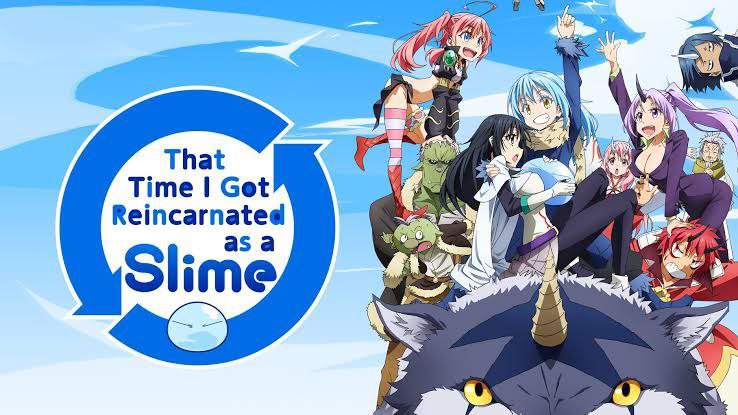
That Time I Got Reincarnated as a Slime: How a Corporate Salaryman Built a Monster Utopia
In 2018, the isekai genre witnessed a revolution that was both adorable and geopolitically astute. That Time I Got Reincarnated as a Slime (Tensei Shitara Slime Datta Ken) presented a premise that seemed like a joke: a 37-year-old corporate salaryman, Satoru Mikami, is stabbed saving a coworker and reincarnates in a fantasy world not as a hero or a king, but as the lowest-tier monster: a blind, deaf, and mute Slime.
Yet, this humble beginning becomes the foundation for one of the most ambitious, heartwarming, and strategically brilliant stories in modern anime. Blessed with the unique skills [Predator] and [Great Sage], the newly named Rimuru Tempest embarks on a journey not of solitary conquest, but of community building. That Time I Got Reincarnated as a Slime masterfully blends overpowered protagonist satisfaction with deep world-building, complex political alliances, and a core philosophy of inclusivity and mutual prosperity.
Information 

That Time I Got Reincarnated as a Slime
➻ Type :- TV
➻ Genres :- #Isekai, #Action, #Fantasy, #Adventure, #Comedy
➻ Status :- Finished Airing (Season 1, 2 & 3)
➻ Aired :- 2018-2024
➻ Language :- Tamil Dub
➻ Episode :- 24 + 24 + 24
➻ Duration :- 24 min per ep
It is the story of a monster who becomes a leader, a village that becomes a nation, and a worldview that challenges the very nature of power. This compendium is your portal to the Jura Tempest Federation. We will chronicle Rimuru’s evolution, analyze the groundbreaking nation-building narrative, introduce the vast and beloved cast of monsters and humans, and deconstruct why this series about a blue slime became a foundational pillar of contemporary isekai.
Table of Contents
Prologue: The Rebirth of a Salaryman – From Stabbing to Slime
The genius of That Time I Got Reincarnated as a Slime lies in its protagonist’s foundational mindset. Satoru Mikami was not a warrior or a rebel; he was a pragmatic, kind-hearted middle manager. His death is senseless, but his final thoughts are of tying up loose ends at work—a perfectly adult concern.
Upon reincarnation, trapped in a dark cave as a Slime, he doesn’t despair. He applies logic. He discovers his two key abilities: [Great Sage], a hyper-intelligent, analytical voice in his head that functions as a combination AI assistant, encyclopedia, and skill optimizer; and [Predator], the ability to absorb anything, analyze it, and replicate its properties.
His first major act is to befriend the sealed Storm Dragon, Veldora Tempest, who has been bored and lonely for centuries. Through clever use of [Predator], Rimuru absorbs Veldora (freeing him into his stomach as a companionable “roommate”) and gains his immense magicules, a name, and a mission: to explore the world and tell others of Veldora’s glory.
This opening establishes everything. Rimuru’s power is immense, but it is paired with a salaryman’s talent for negotiation, risk assessment, and relationship management. He doesn’t seek to dominate; he seeks to understand, befriend, and improve. His journey begins not with a quest for revenge or glory, but with a friendly promise and a desire to see what’s outside the cave.
Chapter 1: The Protagonist – Rimuru Tempest, The Diplomatic Devourer
Rimuru is the ultimate benevolent powerhouse, a leader whose strength enables compassion rather than tyranny.
- The Salaryman’s Soul in a Monster’s Body: Rimuru’s greatest weapon is his modern, human perspective. He sees the often brutal, speciesist fantasy world through the lens of efficiency, fairness, and win-win solutions. He applies corporate team-building strategies to a village of goblins and treats powerful monsters like potential business partners.
- [Great Sage]/[Raphael] – The Ultimate Support System: This skill evolves from a helpful guide into a near-divine strategic intelligence. It allows Rimuru to optimize his evolution, analyze enemies, and manage the complex logistics of running a nation. It’s the ultimate expression of his desire for orderly, intelligent progress.
- [Predator]/[Beelzebub] – The Engine of Growth: Unlike a violent consumption, Rimuru uses [Predator] primarily for analysis, acquisition, and healing. He uses it to absorb materials, copy useful skills, and even “eat” the attacks of allies to save them. It symbolizes his core approach: assimilating the best of what he encounters to strengthen his community.
- Gender Fluidity and Identity: As a sexless slime who can assume a humanoid form based on Veldora’s mental image (resulting in an androgynous, blue-haired, youthful appearance), Rimuru challenges traditional gender norms. He is referred to with male pronouns due to Satoru’s past life but embodies a fluidity that is central to his inclusive nature.
Chapter 2: The Nation-Building Arc – From Goblin Village to Jura Tempest Federation
The series’ most defining and beloved arc is its meticulous focus on statecraft.
- The Foundational Pact: Rimuru’s first act of leadership is saving a besieged goblin village. He doesn’t just defeat the threat; he negotiates an alliance with the direwolves, another oppressed species. He gives them names (bestowing power via his unique magic), establishing a bond of profound loyalty. This template—meet a problem, find a peaceful solution, empower allies—becomes his modus operandi.
- The Birth of Tempest: The named goblins evolve into Hobgoblins, the direwolves into Tempest Wolves. Under Rimuru’s guidance, they clear land, build houses, develop agriculture, and establish laws. The village rapidly transforms into a functioning town that values all races. Rimuru’s human knowledge drives innovation: creating baths, fermented beverages (a huge hit with dwarves), and structured governance.
- Diplomacy as a Superpower: Tempest’s survival depends on alliances. Rimuru personally brokers relations with the Dwarf Kingdom, securing master craftsmen and trade. He forms a pact with the Dryads of the Forest, gaining ancient wisdom and protection. Each alliance is built on mutual respect and tangible benefit, not subjugation.
- The Philosophy of “Nameless” to “Named”: The act of naming is a core spiritual and mechanical system. It costs the namer a portion of their own power but can catalyze evolution in the recipient, forging an unbreakable bond. Rimuru’s willingness to share his power freely is the bedrock of his followers’ fanatical devotion.
Chapter 3: The Found Family – The Ministers of Tempest
Rimuru’s strength is multiplied through the incredible individuals he gathers, each a leader in their own right.
- The OGs: Gobta and the Hobgoblins: The initial goblins, now evolved into capable ministers and warriors. Rigurd, the steadfast mayor; and Gobta, the improbably lucky and loyal scout who embodies Tempest’s spirit of growth.
- The Kijin: After a fateful encounter, Rimuru names six survivors of the ogre tribe, evolving them into the mighty Kijin—powerful oni who become his executive cabinet and most formidable generals: Benimaru (military commander), Shuna (cultural and domestic affairs), Shion (secretary/bodyguard with lethal cooking), Souei (intelligence), Hakurou (sword master), and Kurobe (blacksmith).
- The Otherworlders: Rimuru attracts other reincarnated souls, like the three otherworldly children, integrating them into Tempest and exploring the deeper mysteries of summoning and reincarnation.
- The Demon Lords & Beyond: The story expands to include complex relationships with the Octagram, the council of true Demon Lords, including the lazy but wise Milim Nava (who becomes Rimuru’s self-proclaimed “best friend”) and the scheming, coffee-loving Demon Lord of Wisdom, Ramiris.
Chapter 4: The Antagonists – Challenges to the Dream
Tempest’s rise is not unopposed. Conflicts test Rimuru’s ideals.
- The Kingdom of Falmuth (& The Western Holy Church): Representing human fear, greed, and religious dogma. Their attack on Tempest catalyzes Rimuru’s most significant evolution, forcing him to confront the brutal cost of protecting his dream and the limits of pure diplomacy.
- The Demon Lord Clayman: A manipulative, weak Demon Lord who schemes from the shadows, using others as pawns. He represents the old, petty ways of demonic politics that Rimuru’s genuine power and charisma disrupt.
- The Eastern Empire: A later-stage antagonist representing militaristic, expansionist human imperialism on a continental scale, forcing Tempest to mature from a city-state into a major military and political power.
Chapter 5: The Power System – A Symphony of Skills
The series features a detailed, almost RPG-like power system that fans love to theorize about.
- Magicules & Skills: All beings possess magicules. Skills are innate or acquired abilities, ranging from common [Fire Resistance] to unique skills like [Predator] and ultimate skills like [Uriel] or [Beelzebub]. [Great Sage]‘s evolution into the ultimate skill [Raphael, Lord of Wisdom] is a key plot point.
- Evolution and Naming: Monsters can evolve through accumulation of power or by being named by a stronger being. This system ties power directly to relationships and legacy.
- Battle as a Tactical Puzzle: Major fights are less about brute force and more about skill analysis, adaptation, and strategic use of specific abilities. [Great Sage]/[Raphael] often provides real-time analysis, making battles feel like intelligent duels.
Chapter 6: Themes – The Heart of a Slime
Beyond the fun and power, the series champions potent ideas.
- Found Family & Community: The central, beating heart of the story. Tempest is a family of outcasts who build a home together. Loyalty, care, and mutual support are its core values.
- Benevolent Leadership: Rimuru models a leader who empowers others, values all contributions, and leads from the front with compassion. It’s a utopian vision of management.
- Coexistence Over Conflict: The series’ main ideological conflict is between Rimuru’s dream of a multi-species society and the world’s entrenched racism and fear. Tempest is a living experiment in proving coexistence is not just possible, but prosperous.
- The Value of Knowledge & Innovation: Rimuru’s human-world knowledge is his secret weapon. Introducing concepts like sanitation, structured economy, and rule of law is as revolutionary as his magical power.
Chapter 7: The Anime Phenomenon & Legacy
That Time I Got Reincarnated as a Slime achieved a rare balance that led to massive success.
- Broad Appeal: It combined cute character designs (Rimuru as a slime), satisfying power progression, large-scale political drama, and heartfelt slice-of-life moments, attracting a diverse fanbase.
- The “Comfy OP” Experience: It provides the wish-fulfillment of an overpowered protagonist without the edginess, focusing on creation and camaraderie. It’s a “feel-good” power fantasy.
- Faithful & Expansive Adaptation: The anime, with multiple seasons and OVAs, has done an excellent job adapting the dense light novel material, with high-quality animation for key battles and a stellar voice cast (notably Miho Okasaki as Rimuru).
- A Gateway to Grand Narrative: It starts small but expands into a truly epic geopolitical saga, rewarding long-term investment with an ever-growing, interconnected world.
Conclusion: The Dream Made Flesh
That Time I Got Reincarnated as a Slime is more than just another isekai. It is a blueprint for a better world, delivered with charm, intelligence, and exhilarating scale. In Rimuru Tempest, we see the ideal leader: powerful enough to protect, wise enough to guide, and kind enough to inspire. The story validates the idea that strength is best used not to take, but to build; not to isolate, but to connect.
From a lonely slime in a cave to the cornerstone of a federation that reshapes continents, Rimuru’s journey proves that the smallest being can have the biggest heart and the grandest vision. For its unparalleled world-building, its endlessly endearing cast, and its uplifting message of unity and progress, That Time I Got Reincarnated as a Slime has cemented itself not just as a top-tier isekai, but as a modern anime classic. It invites us all to imagine what we could build if we led with empathy, shared our power, and dared to dream of a nation where everyone has a name, a purpose, and a place to call home.

Also Check
- The Apothecary Diaries (Season 1-2) Tamil [480p 720p 1080p]
- Trapped in a Dating Sim: The World of Otome Games is Tough for Mobs (Season 01) Tamil [480p 720p 1080p]
Final Summary 🪶
IMDB - 8
MyAnimeList - 9.2
8.6
Average Score
That Time I Got Reincarnated as a Slime is a chill and fun isekai. Watching Rimuru grow from slime to overpowered leader is oddly satisfying. The world-building and characters are solid and easy to get attached to. If you want light adventure with a bit of strategy and humor, this one’s a good pick.

