
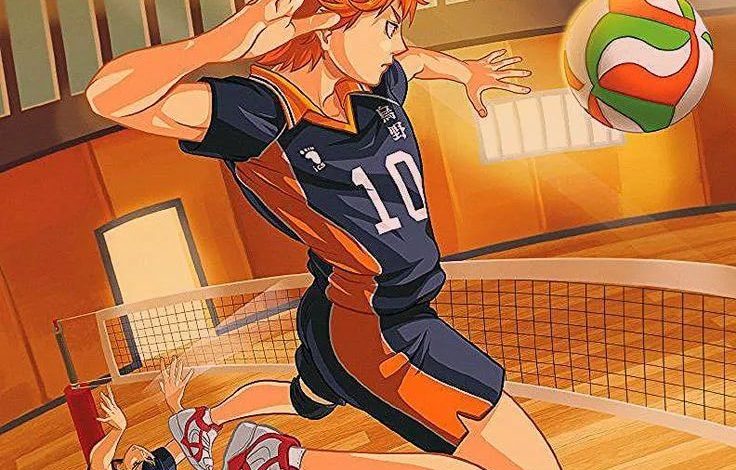
Haikyu!!: The Anatomy of Flight – How a Sports Anime Soared to Become a Cultural Touchstone
In the pantheon of sports anime, few series have captured the raw, unadulterated joy and heart-pounding tension of athletic competition as completely as Haikyu!!. Since its anime debut in 2014, based on Haruichi Furudate’s manga, this story about a high school boys’ volleyball team has transcended its genre to become a global phenomenon.
At its core, Haikyu!! follows Shoyo Hinata, a short-statured, hyper-energetic boy obsessed with volleyball after seeing the “Little Giant” play on TV, and Tobio Kageyama, a prodigiously talented but socially inept setter dubbed the “King of the Court” for his demanding perfectionism. Bitter rivals in middle school, they are forced to become teammates at Karasuno High, a former powerhouse now fallen from grace, nicknamed the “Flightless Crows.”
Their journey is not just about winning tournaments; it’s a masterclass in character development, tactical depth, and the profound beauty of teamwork. Haikyu!! does something miraculous: it makes you care deeply about every spike, every receive, every tactical shift, and every player on both sides of the net.
Information 

Haikyu!!
➻ Type :- TV
➻ Genres :- #Sports, #Comedy, #Drama, #School, #Shounen
➻ Status :- Finished Airing (Season 1-4)
➻ Aired :- 2014-2020
➻ Language :- Tamil
➻ Episode :- 25 + 25 + 10 + 13
➻ Duration :- 24 min per ep
This guide is your all-access pass to the gymnasium. We will trace Karasuno’s ascent, dissect the iconic duo of Hinata and Kageyama, analyze the series’ revolutionary approach to sports storytelling, and explore why Haikyu!! is universally hailed as one of the greatest anime of all time.
Table of Contents
Prologue: The Clash of the Dumpster Battle – A Rivalry Forged in Defeat
The story of Haikyu!! ignites with one of the most iconic first meetings in anime. In his final middle school tournament, Shoyo Hinata, despite having no team and barely any formal training, scrapes together a ragtag club to compete. His path crosses with Tobio Kageyama’s polished, powerhouse Kitagawa Daiichi team. The mismatch is catastrophic.
Hinata’s team is obliterated, but in a fleeting, brilliant moment, Hinata executes a lightning-fast spike off a clumsy set—a glimpse of shocking potential. Kageyama, enraged by his own team’s lack of effort, delivers a blistering set that none of his teammates can hit, cementing his tyrannical “King of the Court” reputation.
They part with a vow of hatred, each seeing the other as the embodiment of their failure. Hinata sees Kageyama as the arrogant genius who crushed his dream. Kageyama sees Hinata as the reckless amateur who showed up his team. Fate, however, has other plans. Both enroll at Karasuno High, the alma mater of the “Little Giant,” Hinata’s idol. Their reunion is a powder keg.
The coach, seeing not just conflict but potential, forces them into a 3-on-3 practice match. If they lose, they must quit the club. This “Dumpster Battle” is the series’ true inciting incident. To win, the two prodigies—one of instinct and athleticism, the other of technical genius—must find a way to synchronize.
In a moment of desperate, unspoken understanding, they create the “Freak Quick”: a blindingly fast attack where Kageyama sets the ball to a point in the air, trusting Hinata will already be there, mid-leap, to spike it. This attack becomes the symbol of their partnership and Karasuno’s revival. It proves that their greatest weaknesses—Hinata’s lack of technique, Kageyama’s lack of trust—can be solved only by each other.
Chapter 1: The Protagonists – The Oddest Combo
Shoyo Hinata: The Sun
Hinata is the series’ boundless, radiant energy source. His character arc is about transforming raw passion into refined skill.
- The Power of Obsession: Hinata’s love for volleyball is pure and infectious. He doesn’t play for glory or to prove others wrong (though that’s a bonus); he plays because he genuinely thinks it’s the coolest thing in the world. This joy becomes the emotional engine for the entire team.
- The Underdog’s Intelligence: While initially lacking formal skills, Hinata possesses extraordinary court sense, spatial awareness, and predatory instincts. He learns through mimicry, observation, and relentless practice. His growth is a testament to hard work compensating for physical limitation (his height), though the series never pretends height isn’t a factor—it’s an obstacle he creatively overcomes.
- The Ultimate Decoy: His role evolves from just spiking the Freak Quick to becoming Karasuno’s ultimate decoy. His mere presence and insane speed force opposing blockers to commit to him, opening up opportunities for his teammates. He learns that his greatest value isn’t always in scoring the point himself, but in creating the chance for others to score—a profound lesson in selfless teamwork.
Tobio Kageyama: The King Who Learned to Serve
Kageyama’s journey is one of the most nuanced portrayals of a genius learning to be part of a team.
- The Burden of Talent: Kageyama’s technical skill is sublime. He can place a set anywhere on the court with pin-point accuracy. But in middle school, this talent became a curse. His standards were so high, his communication so poor, that he alienated his teammates, earning his scornful nickname.
- The Quest for the “Perfect Set”: Kageyama begins with a mechanistic view: the setter delivers the perfect toss, and the spiker must hit it. At Karasuno, he learns there is no “perfect set” in a vacuum; there is only the right set for that specific spiker at that specific moment. He must learn to “serve” his hitters, adjusting to their preferences, rhythms, and abilities.
- From Tyrant to Partner: His relationship with Hinata is the catalyst. Hinata is the one spiker who can keep up with his insane sets, forcing Kageyama to trust. Through Hinata and his other teammates, Kageyama slowly, awkwardly, learns empathy, communication, and the joy of collaboration. His evolution from a solitary king to Karasuno’s indispensable “king of the court” in the true sense is the series’ emotional spine.
Chapter 2: The Team – Karasuno, The Revival of the Flightless Crows
Karasuno is not a team of flawless superstars; it’s a mosaic of flawed, complementary pieces learning to fly together.
- The Third-Years: The Foundation
- Daichi Sawamura: The unwavering captain and bedrock of the team. A supremely reliable receiver and defender, he is the team’s moral compass and defensive anchor.
- Koshi Sugawara: The gentle vice-captain and backup setter. “Suga” embodies the team’s heart. His selflessness, strategic mind, and emotional intelligence provide crucial stability and support, especially for Kageyama.
- Asahi Azumane: The “Ace” who must overcome his own anxiety and fear of failure. His arc is about reclaiming the title of ace not just with power, but with courage and reliability.
- The Second-Years: The Unlikely Aces
- Yu Nishinoya: The libero, “The Guardian Deity of Karasuno.” A whirlwind of energy and arguably the best defensive player in the series. His receives are miraculous, and his fiery spirit lifts the entire team.
- Ryunosuke Tanaka: The quintessential passionate wing spiker. Loud, aggressive, and fiercely loyal, Tanaka’s growth from a hot-headed power hitter to a strategically smarter, emotionally mature player is deeply rewarding.
- The First-Years & Coach: The New Blood
- Kei Tsukishima: The tall, cynical middle blocker. Tsukishima begins as the team’s biggest skeptic, playing volleyball out of obligation. His journey from a dispassionate blocker relying on height and IQ to discovering his own “moment” of thrilling, emotional investment in the game is one of the series’ most celebrated arcs.
- Tadashi Yamaguchi: Tsukishima’s best friend and a pinch-server specialist. Yamaguchi’s arc is about finding value and courage as a role player, mastering the float serve to become a secret weapon, and stepping out of his friend’s shadow.
- Ittetsu Takeda: The enthusiastic faculty advisor who knows nothing about volleyball but provides unwavering logistical and emotional support.
- Keishin Ukai: The young, pragmatic coach and grandson of Karasuno’s legendary former coach. Ukai’s strength is his modern tactical mind and his ability to see and nurture the unique potential in each of his wildly different players.
Chapter 3: The Rivals – A Gallery of Giants and Geniuses
Haikyu!! is legendary for making every opposing team feel fully realized, with their own philosophies, star players, and compelling motivations.
- Aoba Johsai (Seijoh): The first major rival. A well-rounded, strategically brilliant team led by the charismatic setter Tooru Oikawa, Kageyama’s former senpai and his polar opposite. Oikawa is not a “genius” but a “normal” player who through relentless work, observation, and leadership has become the best setter in the prefecture. Seijoh represents the formidable wall Karasuno must first scale.
- Shiratorizawa Academy: The prefectural champions, embodying raw, overwhelming power. Led by the national-level ace Wakatoshi Ushijima, a left-handed spiker of monstrous strength, they play a simple, brutal philosophy: power triumphs over all. Defeating them requires Karasuno to prove that speed, variety, and teamwork can topple a titan.
- Nekoma High: The “Fated Rival.” Known as the “Team with the Iron Wall” for their legendary defensive prowess. Led by the clever setter Kenma Kozume, Nekoma is the strategic, cerebral counterpoint to Karasuno’s aggressive, offensive style. Their matches are less battles and more intricate, high-stakes chess games, culminating in the long-awaited “Battle of the Garbage Dump.”
- Inarizaki High: The Inter-High national runners-up. A team overflowing with twin stars (Atsumu and Osamu Miya) and flamboyant talent. They play with a chilling confidence and a “We Don’t Need Memories” mantra, representing the absolute peak of high school volleyball that Karasuno must reach.
Chapter 4: The Art of Volleyball – Tactical Depth and Realism
What sets Haikyu!! apart is its reverent, educational, and thrilling depiction of the sport itself.
- Technical Accuracy: The series meticulously explains real volleyball concepts—the different types of serves (float, jump), blocking strategies (read, commit), defensive formations (serve receive, perimeter), and offensive combos (quick attacks, back attacks, minus tempo). Fans often learn the sport by watching.
- The “Inner Monologue” Battles: Key rallies are broken down through the simultaneous inner thoughts of multiple players. We see the setter reading the blockers, the blocker anticipating the setter, the spiker adjusting mid-air. This turns each point into a multi-layered psychological and tactical duel.
- Emphasis on All Roles: It celebrates every position. The spotlight shines as brightly on Nishinoya’s miraculous dig, Daichi’s perfect receive, or Yamaguchi’s clutch serve as it does on a spectacular spike. The series reinforces that volleyball is the ultimate team sport; no one can score without the other five players.
Chapter 5: Themes – The Heart of the Game
Haikyu!! uses volleyball as a lens to explore universal human experiences.
- Talent vs. Hard Work: The series never gives a simple answer. It showcases natural geniuses (Kageyama, Ushijima), hard workers who reach the top (Oikawa, Daichi), and those who blend both (Hinata). It argues that while talent sets a starting point, dedication, strategy, and love for the game determine the finish line.
- The Beauty of Specialization: Each player has a role, and greatness is found in mastering it, whether you’re the ace, the decoy, the libero, or the pinch server. The series validates the idea that contributing your unique piece is what makes the team whole.
- Loss as a Catalyst for Growth: Karasuno loses—often and painfully. But each loss is dissected, learned from, and used as fuel. The series portrays failure not as an ending, but as the most essential part of the journey.
- Legacy and Continuity: The theme of “flight” is central. The current Karasuno team is standing on the shoulders of the Little Giant’s generation, and they are building a legacy for the first-years who will come after them. The sport is a continuous chain of inspiration and growth.
Chapter 6: The Anime Production – A Masterclass in Hype and Emotion
The adaptation by Production I.G. is a large part of the series’ success.
- Animation & Direction: The animation makes volleyball feel dynamic, athletic, and incredibly intense. The use of dramatic camera angles, slow-motion, and impactful sound design (the BAM of a spike, the THUD of a receive) creates cinematic gravitas for every play.
- Voice Acting & Soundtrack: The voice cast is legendary, perfectly capturing each character’s passion and personality. The soundtrack, featuring iconic themes like “The Ultimate Weapon” and “Chimera,” is expertly used to elevate moments of tension, triumph, and emotion.
- Pacing and Payoff: The series expertly builds tension over multiple episodes for a single match, making every point feel monumental. The payoff for long-built strategies or character arcs within a rally is immensely satisfying.
Chapter 7: Cultural Impact and Legacy
Haikyu!!‘s influence extends far beyond the screen.
- Global Volleyball Boom: The anime is credited with inspiring a surge of interest in volleyball worldwide, with countless fans joining clubs or taking up the sport.
- A Benchmark for Sports Anime: It set a new standard for character depth, rival development, and tactical realism in the genre, influencing a generation of subsequent sports stories.
- A Story for Everyone: While about volleyball, its themes of chasing dreams, overcoming insecurity, valuing teamwork, and dealing with failure resonate with anyone, athlete or not.
- The “Haikyu!! Effect”: The series has spawned movies, stage plays, and an immense amount of merchandise, cementing its place as one of Shonen Jump’s most successful modern properties.
Conclusion: The Point That Never Ends
Haikyu!! is more than a sports anime; it is a celebration of human potential, connection, and the sheer, addictive joy of pursuing something you love. It understands that victory is sweet, but the real story is in the sweat on the practice floor, the trust built between teammates, the respect forged with rivals, and the unbreakable spirit that gets up after a fall.
Through Hinata’s boundless energy, Kageyama’s relentless pursuit of perfection, and the collective heart of Karasuno High, the series delivers a powerful, enduring message: greatness isn’t a solo act. It’s a combination—a quick set to a point in the air, trusting that your partner will be there to meet it. It’s the sound of a perfectly synchronized team taking flight.
Long after the final whistle, Haikyu!! leaves you believing that with enough passion, hard work, and the right people beside you, even the flightless can learn to soar. The game may be over, but the love for it, like the ball itself, is always in the air.

Also Check
- Mobile Suit Gundam: The Witch from Mercury (Season 01) Tamil [480p 720p 1080p]
- Gachiakuta (Season 01) Tamil [480p 720p 1080p]
Final Summary 🪶
IMDB - 8.7
MyAnimeList - 9.2
9
Average Score
Haikyuu is one of those anime that just makes you feel good. The matches are hype, but the character growth is what really hooks you. Every team and rival feels meaningful. Even if you’re not into volleyball, it gets you invested fast.

